-
Description


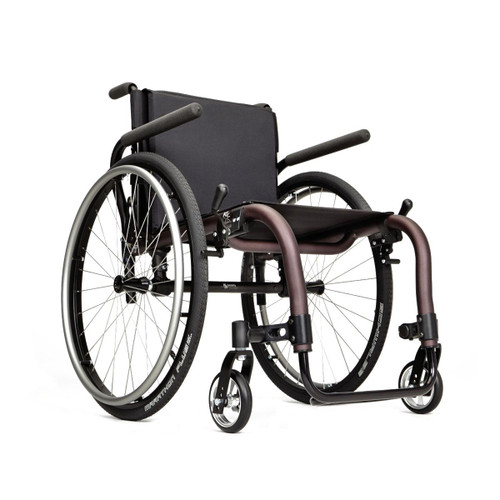
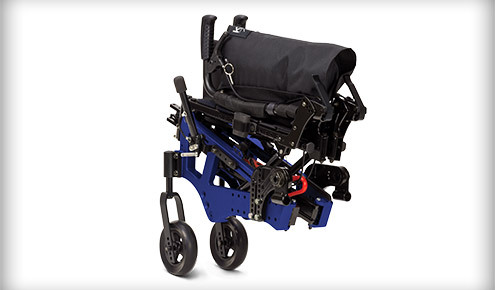
Finally, one wheelchair that offers true portability, enables independent propulsion and provides the benefits of tilt-in-space!Folding Base for convenient PortabilityThe folding frame option for Liberty is perfect for those that require a Tilt in Space product and the portability offered by a folding frame. Weighing in with a 26 lb transport weight, the Liberty Folding Base provides the user with independent foot or hand propulsion and the caregiver with the option to easily fold and transport the chair.
Rigid Base OptionThe rigid base is perfect for users, caregivers, and facilities that do not require or need folding functionality. The rigid base has fewer moving parts while providing the same options and wheel access for independent mobility. In addition, the optional fold-down back and a 24.5 lb transport weight makes it the lightest and easiest tilt-in-space chair to transport.
MagExclusive to Ki, the magnesium Maxx Mag wheel reduces overall chair width by up to 1" while providing greater stiffness and lower weight than classic nylon composite mag wheels.Maxx Mag wheels are available in 20”, 22” and 24”.
Lightweight DesignLiberty utilizes the most recent technologies, including high pressure metal molding. This results in an incredibly strong and lightweight part. For example, the side frame only weighs 2.8 lbs.
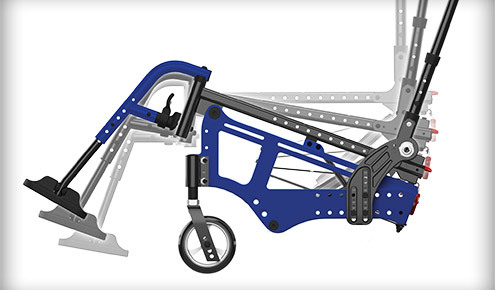
Easy RepositioningEveryone needs relief from sitting in a static position. Whether your primary concern is pressure relief, facilitating proper posture or just providing a break from gravity, Liberty makes it painless. Featuring an easy to adjust gas spring design, adjusting the system for effortless repositioning is simple.
Improved MobilityLiberty is designed for independent mobility, especially foot propulsion. The front seat height remains the same regardless of the tilt angle. Simply choose the tilt angle that provides the best pelvic stability without compromising mobility.
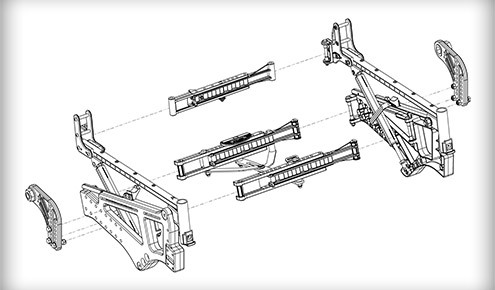
Modular DesignReacting quickly to a short discharge notice, which happens frequently in stroke rehabilitation, is challenging. With Liberty's modular design, in most cases, no additional parts are necessary to reconfigure the frame.Frame width, frame depth, backrest height, seat to floor height and CG are all easily adjustable. Adapting the chair for delivery or in response to changing user needs has never been easier in an adult tilt chair.
SPECIFICATIONSLiberty (Folding) Transport Weight* 25.8 lbs (11.7 kg) Liberty (Rigid) Transport Weight* 24.5 lbs (11.1 kg) Seat Width 14" - 22" (35.6 - 55.9 cm) Seat Depth 14" - 20" (35.6 - 50.8 cm) Seat Height 13" - 20" (33 - 50.8 cm) Tilt Range 0° - 20° Weight Capacity 250 lbs (113.4 kg) Transit Approved YES *16x16 fixed back with armrests, footrests and rear wheels removed.
**Liberty is WC-19 approved with the folding backrest only.COLORSGloss(Frames and Accents)
Gloss Black
Ruby Red**
Deep
Sapphire Blue**
Dark Pink
Radiant Orange
Purple Plum
Blue Steel
Rich TealMatte(Frames and Accents)
Shadow Black
Tactical Green
Dry Earth Tan
White
Bright Red
Platinum**
Iridescent Navy -
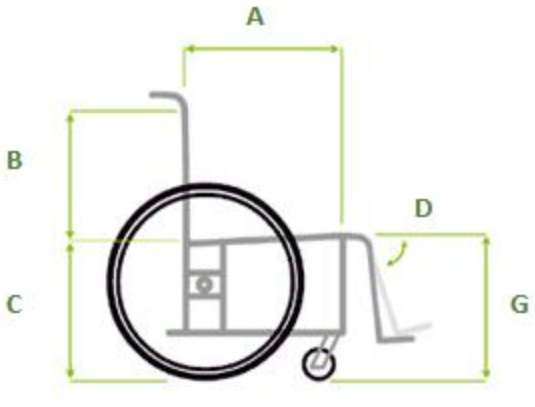
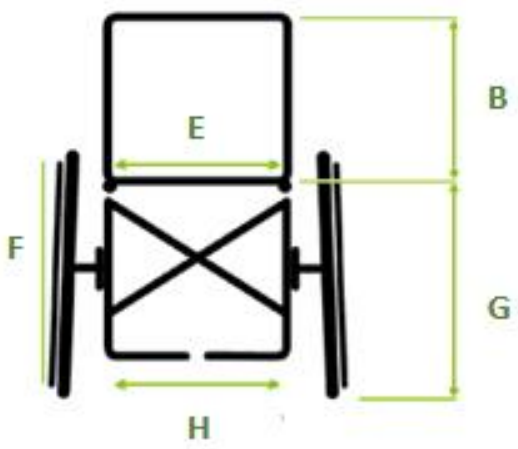
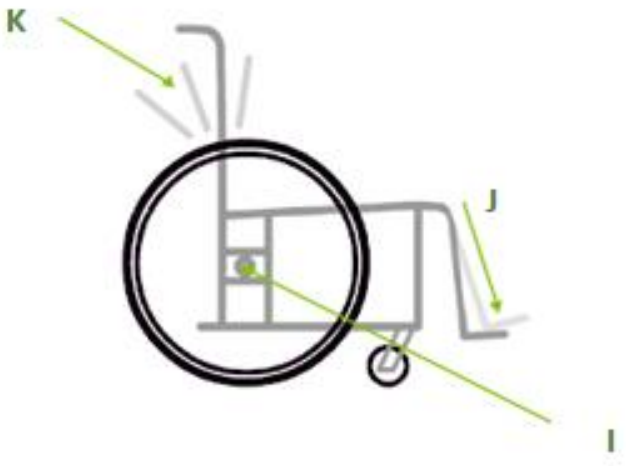
Size Chart / measuring guide
A-Seat DepthMeasure from the most posterior point of the body to the inside of the knee, minus at least two inches. Some prefer more leg overhang to make room for their hand when lifting their leg.B-Back HeightMeasured from the seat base to the top of the wheelchair back. Depends on how much upper back support is needed, and also affects freedom for the upper body to rotate.c-Rear Seat to FloorMeasurement from the ground to the rear seat edge. Relative to the front seat-to-floor dimension, this determines the rearward slope ("dump" or "squeeze") of the wheelchair seat.D-Hanger AngleDetermines how far the toes extend away from the body, measured from the horizontal. A tighter angle allows the wheelchair to turn around in less space. Depends in part on ability of the knee to bend towards the perpendicularE-Seat WidthDetermined by the widest point of the body from knee to hip, plus an inch to ensure room to move. Consider bulk of clothing, particularly a heavy winter coat, if relevant.F-Wheel CamberAngle of the wheel relative to the vertical. More camber improves stability and agility, but also limits ability to pass through narrow spaces. A typical daily wheelchair uses three degrees of camber.G-Front Seat to FloorMeasure the leg from the back of the knee to the sole of the foot. Then subtract the thickness of the cushion when it is compressed. Next, add a minimum of two inches for footrest clearance. Do not add the footrest clearance if the wheelchair will be foot-propelled.H-Footrest WidthMeasure from the inside of each leg rest tubing the distance or desired distance between leg rests.H-Footrest WidthMeasure from the inside of each leg rest tubing the distance or desired distance between leg rests.I-Center of GravityMeasure from the front of the seat back post to the center of the rear axle.J-Seat to Footrest LengthMeasure from the edge of the seat upholstery to the top rear of the footrest.K-Backrest AngleMeasure the angle of the back post to the floor. Ninety degrees will be perpendicular to the floor, to approximate the angle from the back post to the seat, subtract two degrees from measurement for every .5" of dump