

-
Description

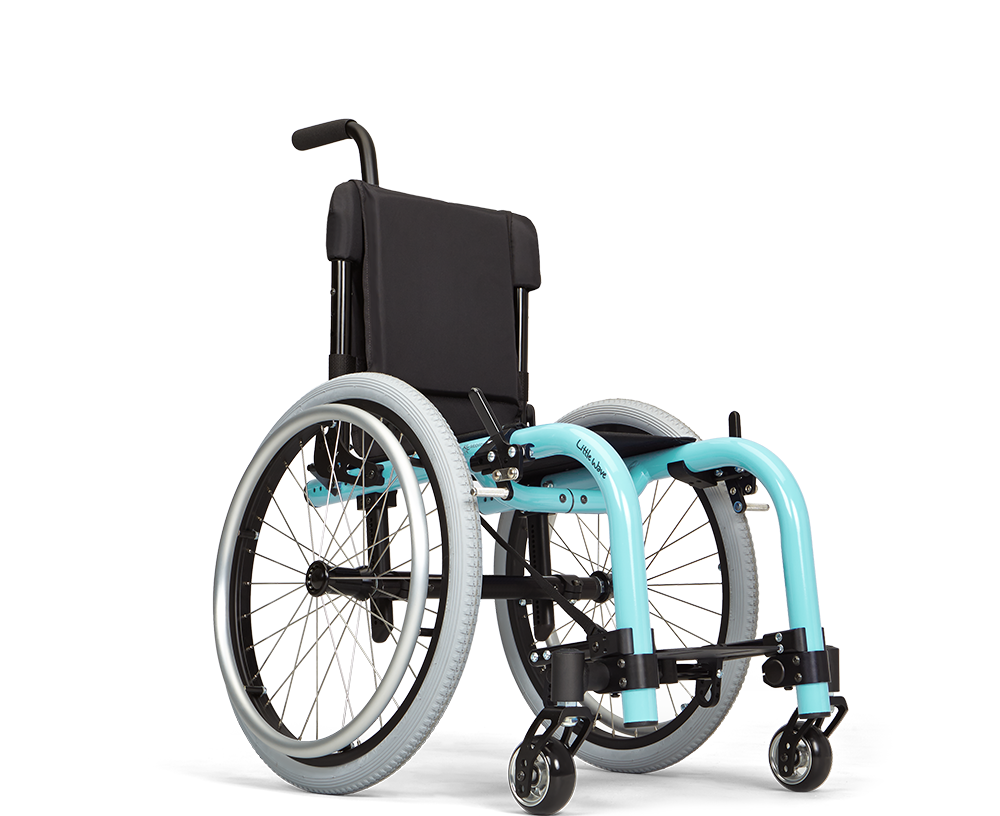
Imagine...A wheelchair that has the ability to move easily within its environment; where the wheels are in the perfect spot so that young people can use all of their strength and leverage to their advantage. Imagine...a wheelchair that has the ability to change and grow long with the person who is using it; yet it is extremely light, simple to use and easy to transport.You don't have to imagine. It's a reality.
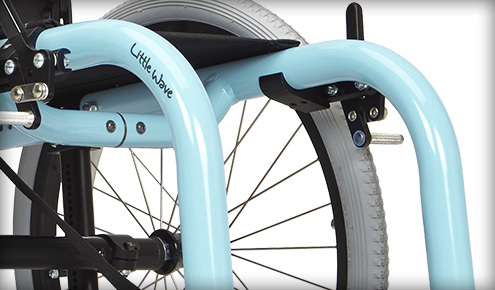
Frame ConstructionThe signature 7000 series 1 3/8" aluminum frame construction of our high performance rigid frame chairs is also used to construct our pediatric chair, Little Wave. This frame construction helps keep the chair as light as possible while also keeping it extremely rigid which makes it so much easier to maneuver, to move around and to help your child get the most out of every push.
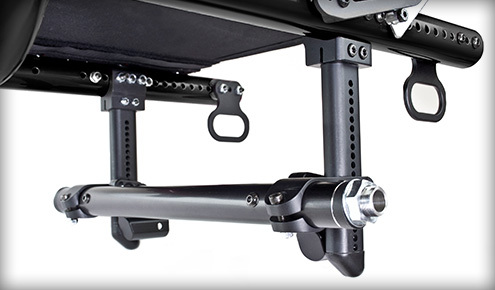
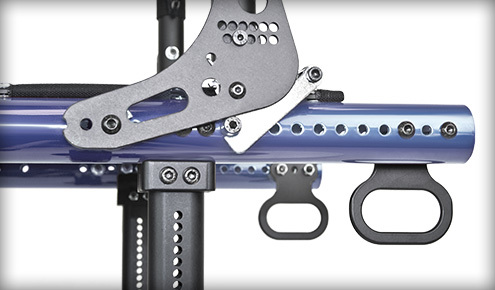
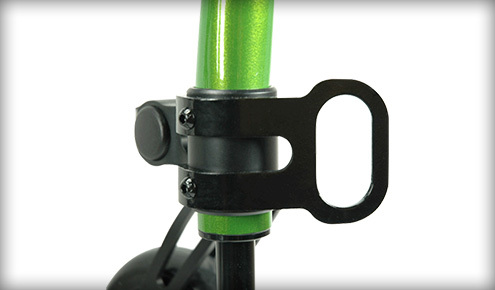
Tower SystemLightweight design, easy adjustment and sleek profile. The CG adjustment of the Little Wave tower design is simple and straightforward, making it easier to adjust the CG, promoting growth and the proper placement of the wheel base, ensuring your child can always have the access to the wheels they need. Not to mention the clamp design allows placement of the backrest right where it needs to be because you do not need to worry about interference with hardware in order to achieve the seating position required.
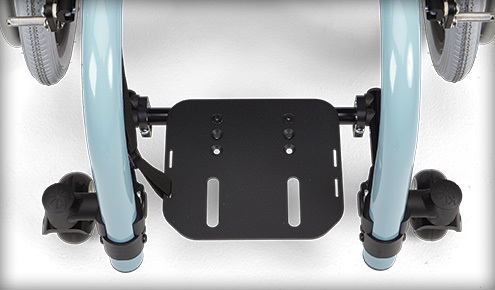
Multi-Adjustable Flip-Up FootplateWe realize that clients are always growing and changing and the options you choose for their chair need to be able to accommodate these changes with ease. This footplate allows for an infinite number of positions over time so it can be repositioned as the rider grows. The 6061 aluminum base with carefully machined edges and textured black powder coat finish will withstand the wear and tear of any army...or a 5 year old! This footplate also has a strap that allows the rider to lift up their footplate without bending down.
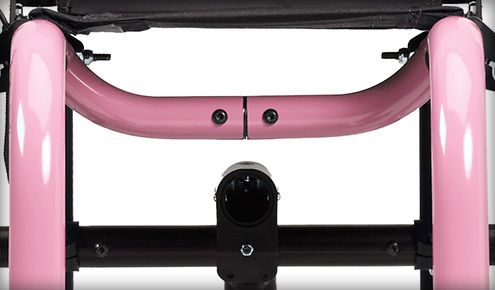
Growing With YouLittle Wave's in-frame expansion allows the chair to grow in width by using frame Xpanders that maintain the frames structural integrity far better than bolt-on cross bars. You don't add it until you need it so it is not in the way and it will not add any extra weight to the chair.
Depth AdjustmentThe depth is predetermined by you on the order form so it will be there when you need it. Up to 3" can be selected and is no extra charge. Allowing easy and accessible growth on-frame is important in allowing the chair to grow with the rider over time, through the years.
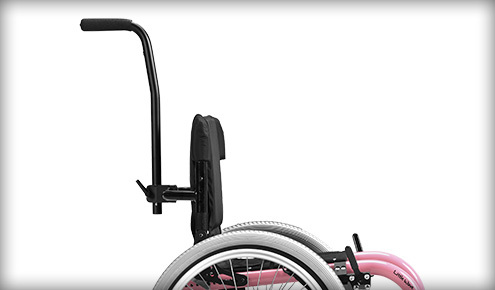
Easy To MoveHeight-adjustable, easy to remove stroller handles make it easy for caretakers to assist the rider. Available with either a single or double handle option and the option to select standard and tall heights ensure comfort and ease of the caretaker, parent or teacher throughout the day.
5th WheelThe Little Wave's optional rotating 5th wheel permits more aggressive positioning of the rear wheels, allowing and promoting midline wheel access. Quickly height adjustable to adapt to varied terrain and easily removable, the 5th wheel revolutionizes pediatric mobility.
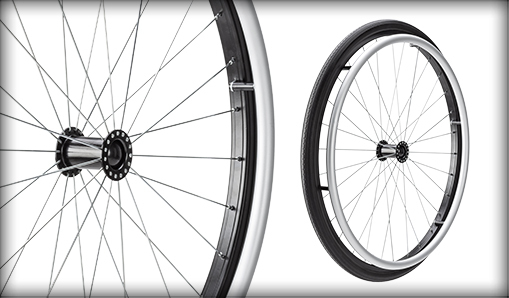
SpokeKi standard spoke uses 30 radial spokes to provide a stiff and durable wheel.
Transit ApprovedTransit tested and approved for added safety and securement during transport.
SpecificationTransport Weight* 10.8 lbs (4.9 kg) Standard Weight 16 lbs (7.3 kg) Seat Width 10" - 16" (25.4 - 40.6 cm) Seat Depth 10" - 16" (25.4 - 40.6 cm) Front Seat Height 11.5" - 20.5" (29.2 - 52.1 cm) Rear Seat Height 11.5" - 20" (29.2 - 50.8 cm) Tubing Size 1 3/8" (3.5 cm) Camber 0°, 2°, 4°, 6°, 8° Weight Capacity 165 lbs (74.8 kg) Transit Approved YES *12”x12” Frame with Adjustable Height Back - 12”, 4” Poly Casters, Angle Adj. Footplate and Standard Upholstery. Armrest and Rear Wheels Removed.ColorsGloss(Frames and Accents)
Gloss Black
Champagne
Ruby Red**
Deep
Sapphire Blue**
Yellow
Opalescent Violet
Dark Pink
Glacier Blue
Electric Green
Radiant Orange
Purple Plum
Blue Steel
Light Pink
Rich TealMatte(Frames and Accents)
Shadow Black
Tactical Green
Dry Earth Tan
White
Bright Red
Platinum**
Iridescent Navy -
Size Chart / measuring guide
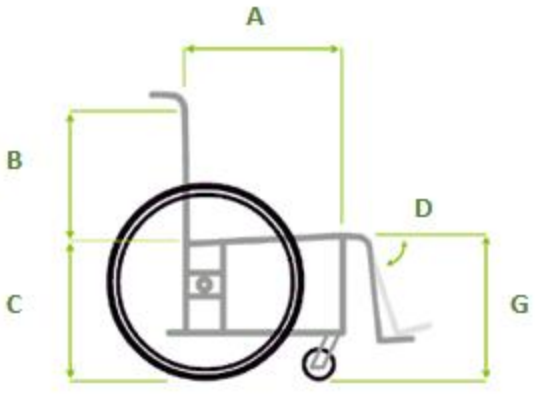
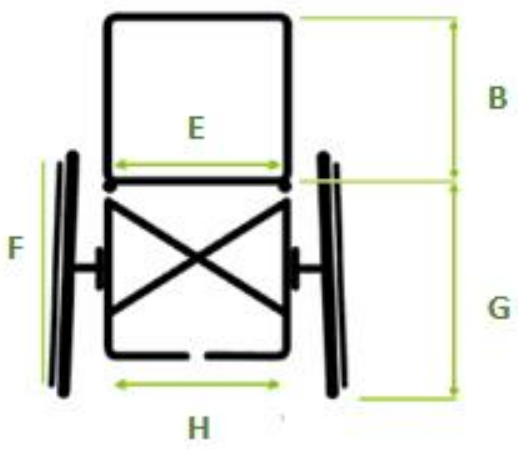
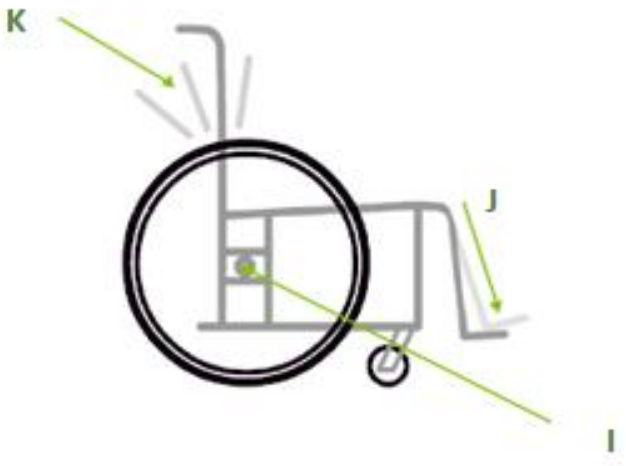
A-Seat DepthMeasure from the most posterior point of the body to the inside of the knee, minus at least two inches. Some prefer more leg overhang to make room for their hand when lifting their leg.B-Back HeightMeasured from the seat base to the top of the wheelchair back. Depends on how much upper back support is needed, and also affects freedom for the upper body to rotate.c-Rear Seat to FloorMeasurement from the ground to the rear seat edge. Relative to the front seat-to-floor dimension, this determines the rearward slope ("dump" or "squeeze") of the wheelchair seat.D-Hanger AngleDetermines how far the toes extend away from the body, measured from the horizontal. A tighter angle allows the wheelchair to turn around in less space. Depends in part on ability of the knee to bend towards the perpendicularE-Seat WidthDetermined by the widest point of the body from knee to hip, plus an inch to ensure room to move. Consider bulk of clothing, particularly a heavy winter coat, if relevant.F-Wheel CamberAngle of the wheel relative to the vertical. More camber improves stability and agility, but also limits ability to pass through narrow spaces. A typical daily wheelchair uses three degrees of camber.G-Front Seat to FloorMeasure the leg from the back of the knee to the sole of the foot. Then subtract the thickness of the cushion when it is compressed. Next, add a minimum of two inches for footrest clearance. Do not add the footrest clearance if the wheelchair will be foot-propelled.H-Footrest WidthMeasure from the inside of each leg rest tubing the distance or desired distance between leg rests.H-Footrest WidthMeasure from the inside of each leg rest tubing the distance or desired distance between leg rests.I-Center of GravityMeasure from the front of the seat back post to the center of the rear axle.J-Seat to Footrest LengthMeasure from the edge of the seat upholstery to the top rear of the footrest.K-Backrest AngleMeasure the angle of the back post to the floor. Ninety degrees will be perpendicular to the floor, to approximate the angle from the back post to the seat, subtract two degrees from measurement for every .5" of dump