


-
Description
5R Rigid Wheelchair

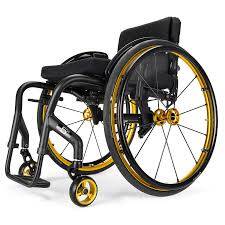
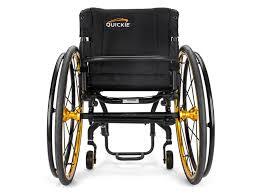
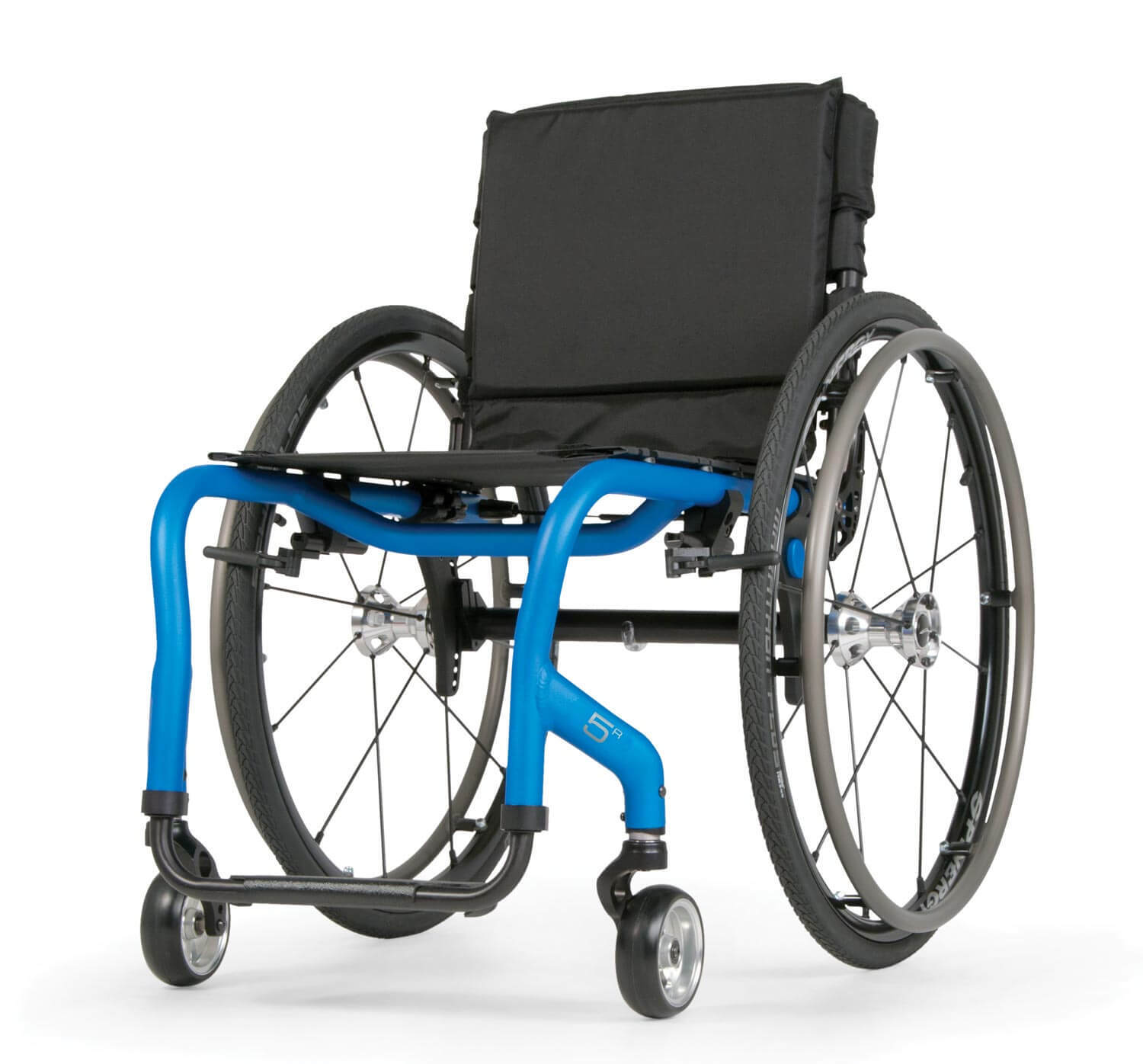
Highly adjustable wheelchair to elevate your mobility The Quickie® 5R is designed to deliver superior rigid wheelchair performance day after day. As you and your environment evolve, or as you refine your riding capabilities, the 5R’s frame and components adjust to elevate your mobility.
Quickie 5R Rigid Ultra Lightwieght Wheelchair

Benefits of a rigid wheelchair
The efficiency of propulsion tends to be greater in a rigid frame wheelchair than in a standard or made-to-order folding wheelchair for several reasons. Rigid wheelchairs are typically manufactured of materials that are lighter in weight than standard or configured folding wheelchairs. Their sleek design also minimizes the amount of material that is used to produce the wheelchair, which further reduces the overall weight. Although these wheelchairs are very light, they are designed to be durable for the active user.
The rolling resistance is less in a rigid frame wheelchair than in a folding frame wheelchair. Rolling resistance is defined as "the force that resists the motion when an object rolls on a surface" (Wikipedia, 2020). Rolling resistance will limit the distance a manual wheelchair coasts after a force, such as from a push stroke, is applied. Several factors contribute to rolling resistance in a manual wheelchair. These factors include the combined mass of the user & the system, the weight distribution between the front casters & rear wheels, the size & type of casters & tires selected, and the surface on which the wheelchair is used. Minimizing the rolling resistance in a manual wheelchair enables more efficient propulsion by reducing the force and frequency of strokes required to propel the wheelchair. This helps to reduce the risk of upper extremity pain and injury.
In addition, a rigid wheelchair has fewer moving parts than a folding wheelchair. When an individual applies force to a rigid wheelchair's handrim, most of the energy of propulsion is directed moving the wheelchair forward, rather than being lost in the flex of the frame (which can happen in a folding frame wheelchair). This further contributes to greater efficiency of propulsion.

Meet Leslie Peoples
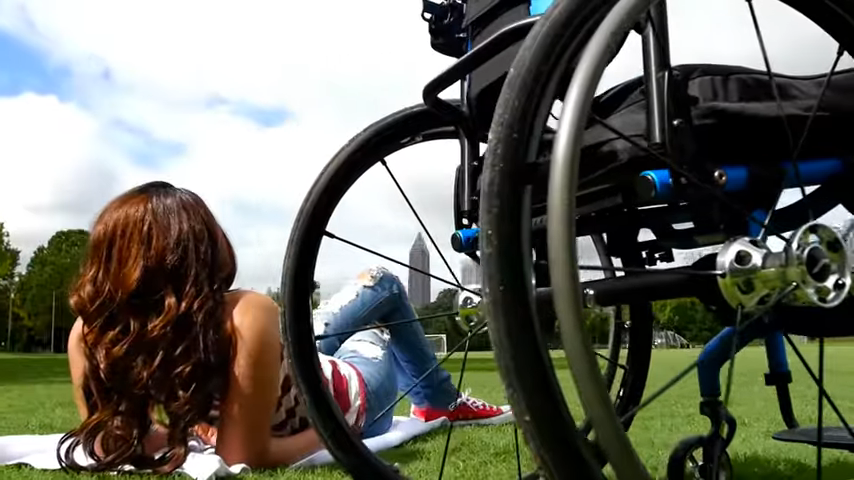
Watch how Leslie explores her city with ease in the lightweight 5R.


Open Frame Design with Hydro-Formed Caster Link
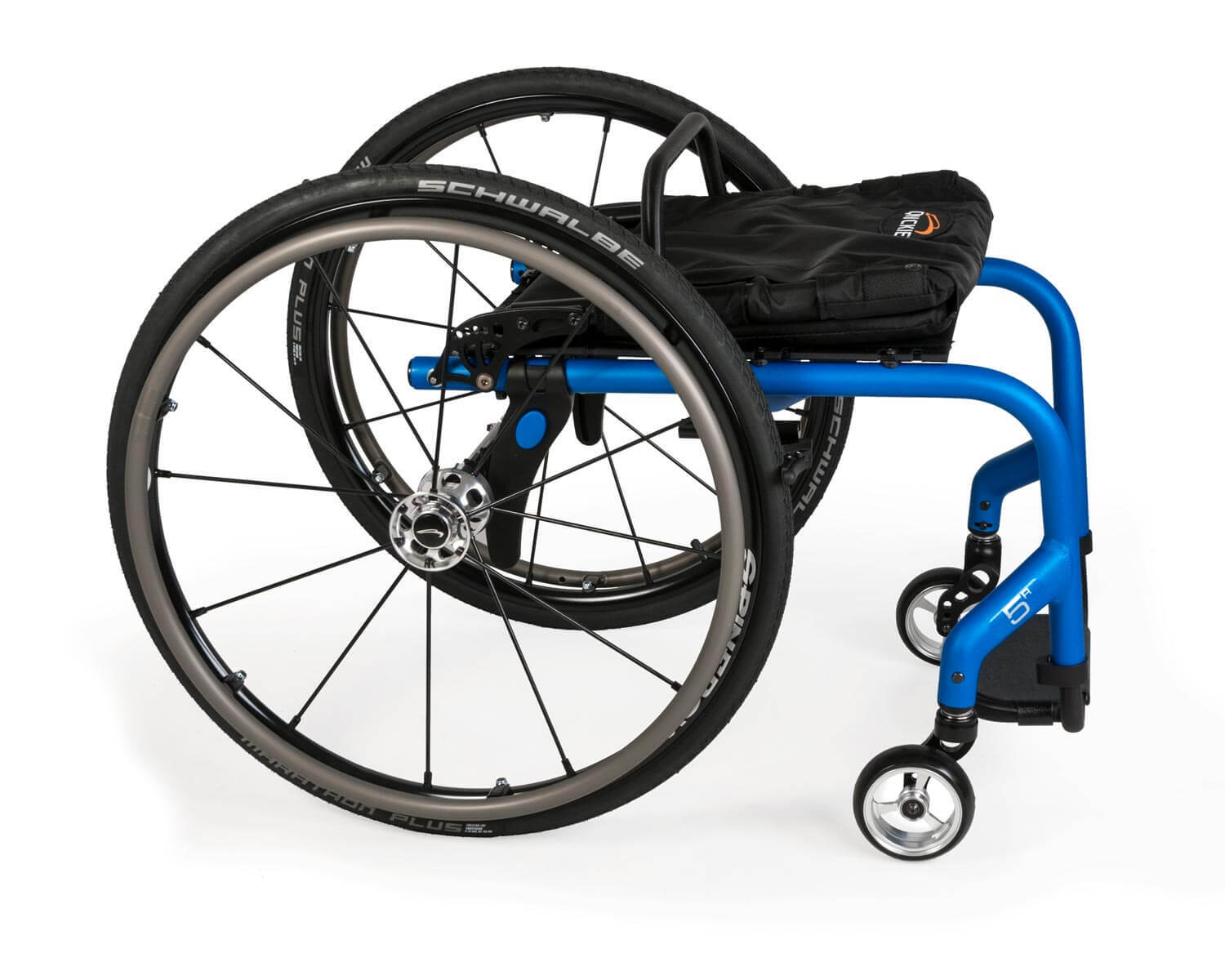
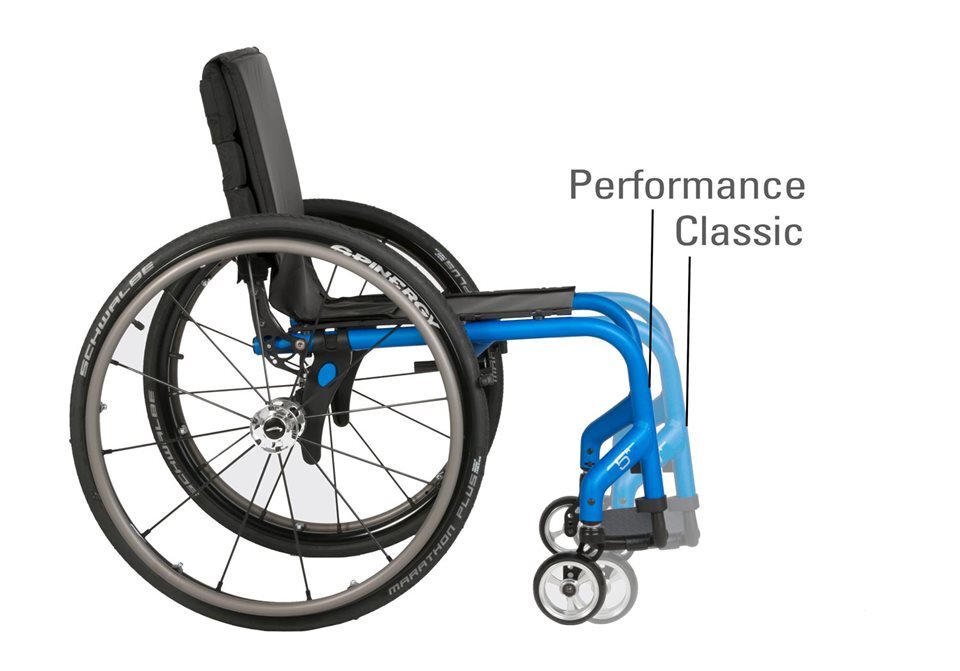
The Quickie 5R’s open frame takes the proven ride quality and geometry that so many have loved about the GT and improves upon it with a swept-back, hydro-formed caster link for added style and a smooth ride.
The 5R offers two frame options. The Classic frame features a traditional frame length for maximum stability. The shortened Performance frame length offers maximum responsiveness.

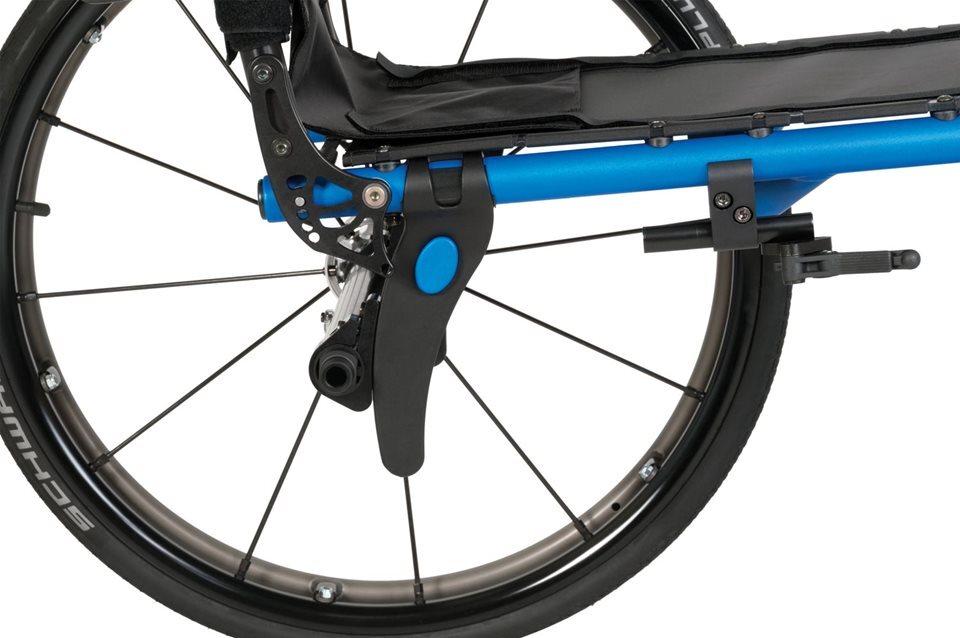
Swept-Back, Highly Adjustable Axle Plate Design
The swept-back axle plate design adds to the 5R's style and features a color window for an extra pop of color on your frame.
But it isn’t just for looks - it is also incredibly quick to adjust. Available in two lengths - short (4.5" of vertical adjustment) and long (6" of vertical adjustment) - this axle plate ensures you are getting the adjustment range you need without adding unnecessary weight.

Access to Premium Options
The 5R offers premium options that can elevate your product.
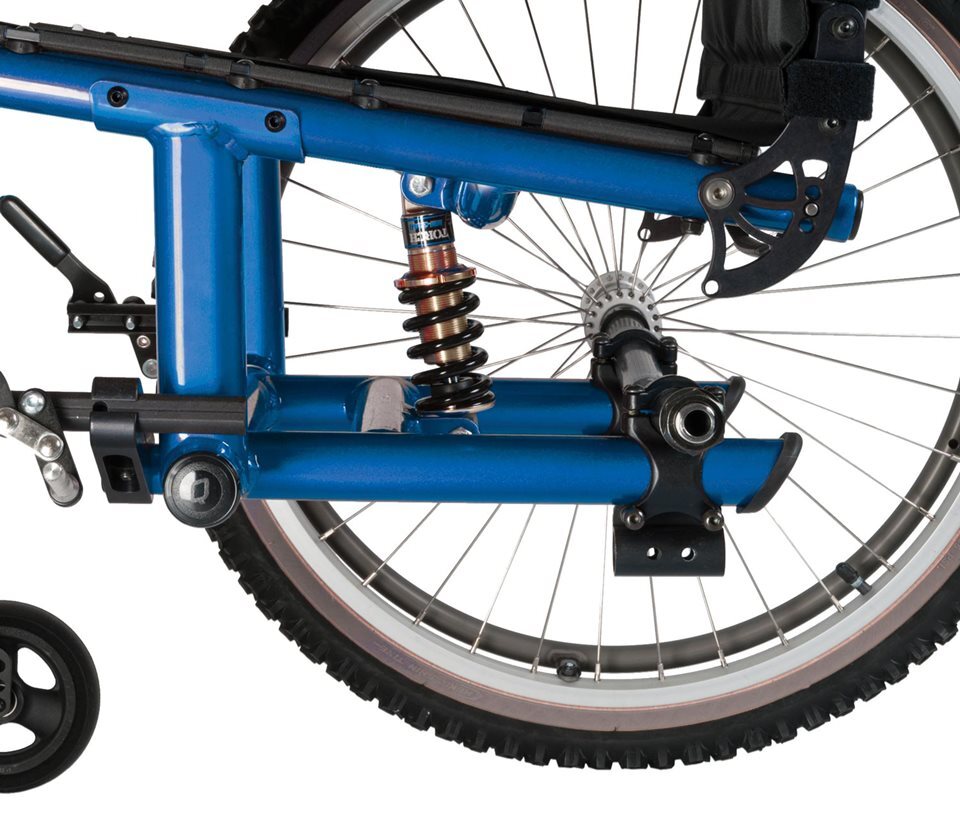
Go with the XTR Suspension Frame, Mountain wheels, Knobby tires, and Frog Legs suspension forks for rugged chair performance.
Add the Quickie Xtender motorized wheels to multiply the force you apply to the handrims by four times.

JAY Seating Options
Choose from JAY's superior cushions and backs to get the most out of your mobility system.
For lightweight skin protection, check out the JAY Lite or JAY X2.
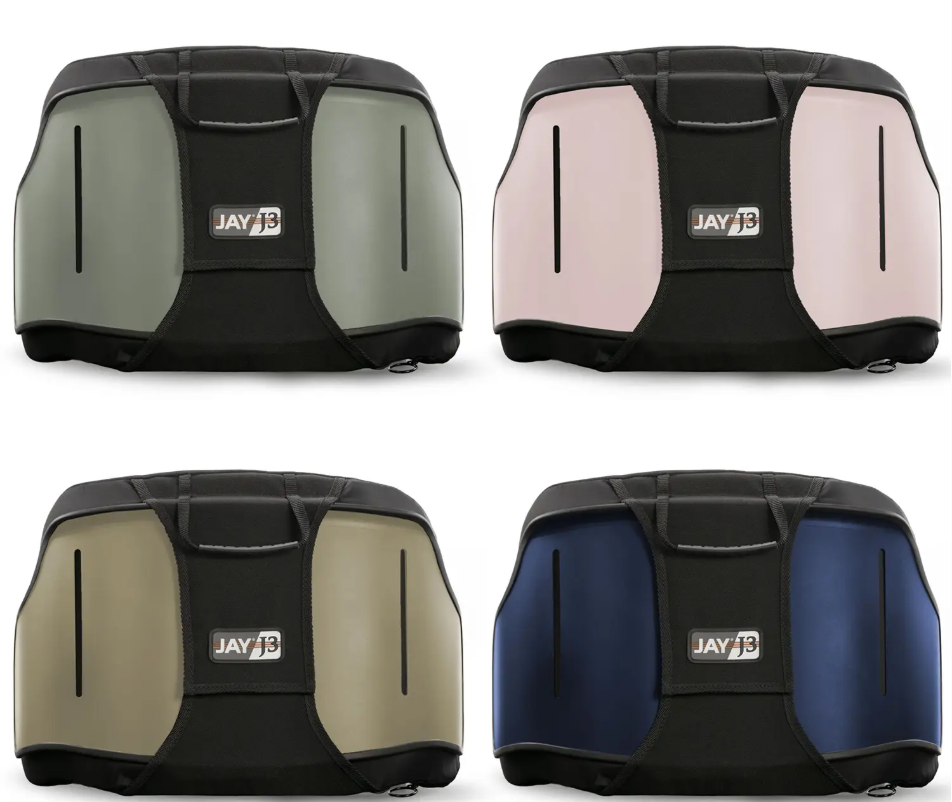
For an incredibly versatile backrest, try the JAY J3 back...and don't forget to have the back shell painted to match or complement your chair at no extra charge.

Specifications
DimensionsSeat Width: 12" to 20"Seat Depth: 12" to 20"Front Seat-to-Floor Height: 16" to 21"Rear Seat-to-Floor Height: 13" to 20"Back Height: 10" to 20"Back Angle Adjustment: Fore (-) 17° to Aft (+) 8°Frame Angle:- 75°
- 80°
- 85°
Camber:- 0°
- 3°
- 6°
- Choose between 4° and 8° with XTR Suspension
Center of Gravity (COG) Adjustment: -1.5" to 4"Shipping Dimensions: 31" L x 24" H x 24" WPerformance/WeightsFrame Type:- Classic
- Performance
- XTR Suspension
- Depth Adjustable Back
Frame Material: AluminumTransit: YesUser Weight Capacity: 265 lbs.Product Weight:- Standard Configuration: 21.5 lbs.
- Transport: 12.9 lbs.
- Transport without Wheel Locks: 11.65 lbs.
Average Shipping Weight: 50 lbs.Colors

-
Size Chart / measuring guide
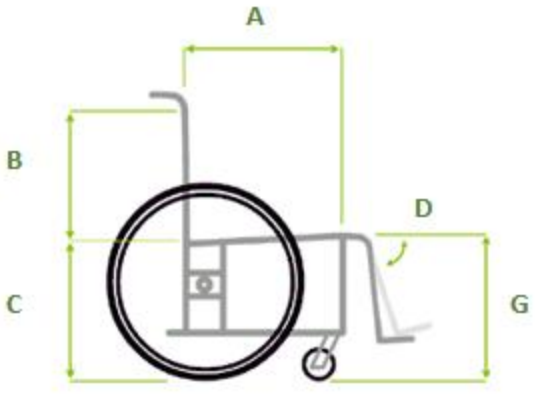
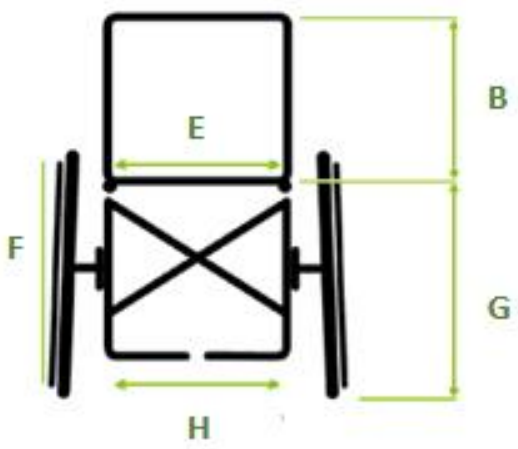
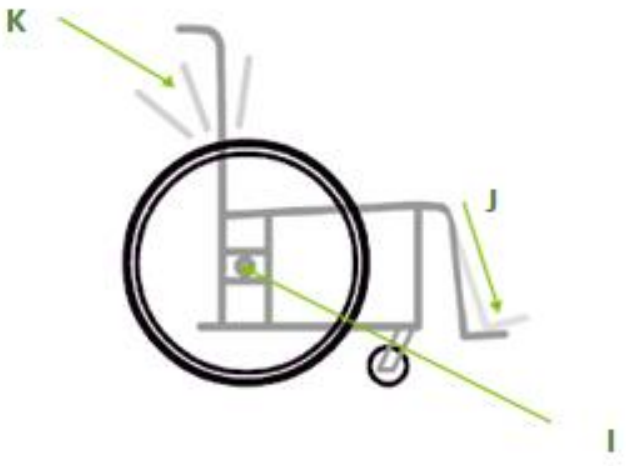
A-Seat DepthMeasure from the most posterior point of the body to the inside of the knee, minus at least two inches. Some prefer more leg overhang to make room for their hand when lifting their leg.B-Back HeightMeasured from the seat base to the top of the wheelchair back. Depends on how much upper back support is needed, and also affects freedom for the upper body to rotate.c-Rear Seat to FloorMeasurement from the ground to the rear seat edge. Relative to the front seat-to-floor dimension, this determines the rearward slope ("dump" or "squeeze") of the wheelchair seat.D-Hanger AngleDetermines how far the toes extend away from the body, measured from the horizontal. A tighter angle allows the wheelchair to turn around in less space. Depends in part on ability of the knee to bend towards the perpendicularE-Seat WidthDetermined by the widest point of the body from knee to hip, plus an inch to ensure room to move. Consider bulk of clothing, particularly a heavy winter coat, if relevant.F-Wheel CamberAngle of the wheel relative to the vertical. More camber improves stability and agility, but also limits ability to pass through narrow spaces. A typical daily wheelchair uses three degrees of camber.G-Front Seat to FloorMeasure the leg from the back of the knee to the sole of the foot. Then subtract the thickness of the cushion when it is compressed. Next, add a minimum of two inches for footrest clearance. Do not add the footrest clearance if the wheelchair will be foot-propelled.H-Footrest WidthMeasure from the inside of each leg rest tubing the distance or desired distance between leg rests.H-Footrest WidthMeasure from the inside of each leg rest tubing the distance or desired distance between leg rests.I-Center of GravityMeasure from the front of the seat back post to the center of the rear axle.J-Seat to Footrest LengthMeasure from the edge of the seat upholstery to the top rear of the footrest.K-Backrest AngleMeasure the angle of the back post to the floor. Ninety degrees will be perpendicular to the floor, to approximate the angle from the back post to the seat, subtract two degrees from measurement for every .5" of dump - Videos