

-
Description

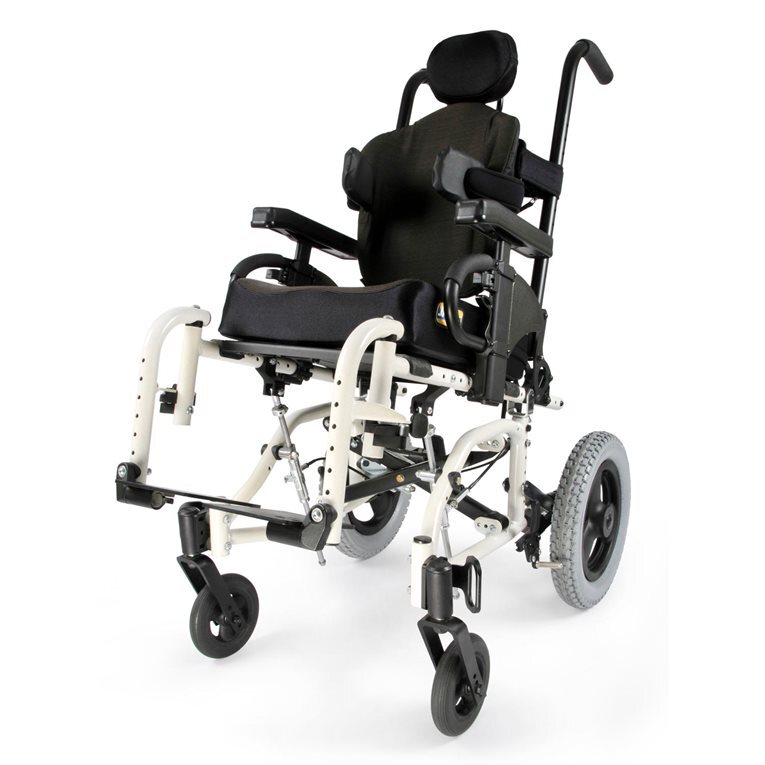
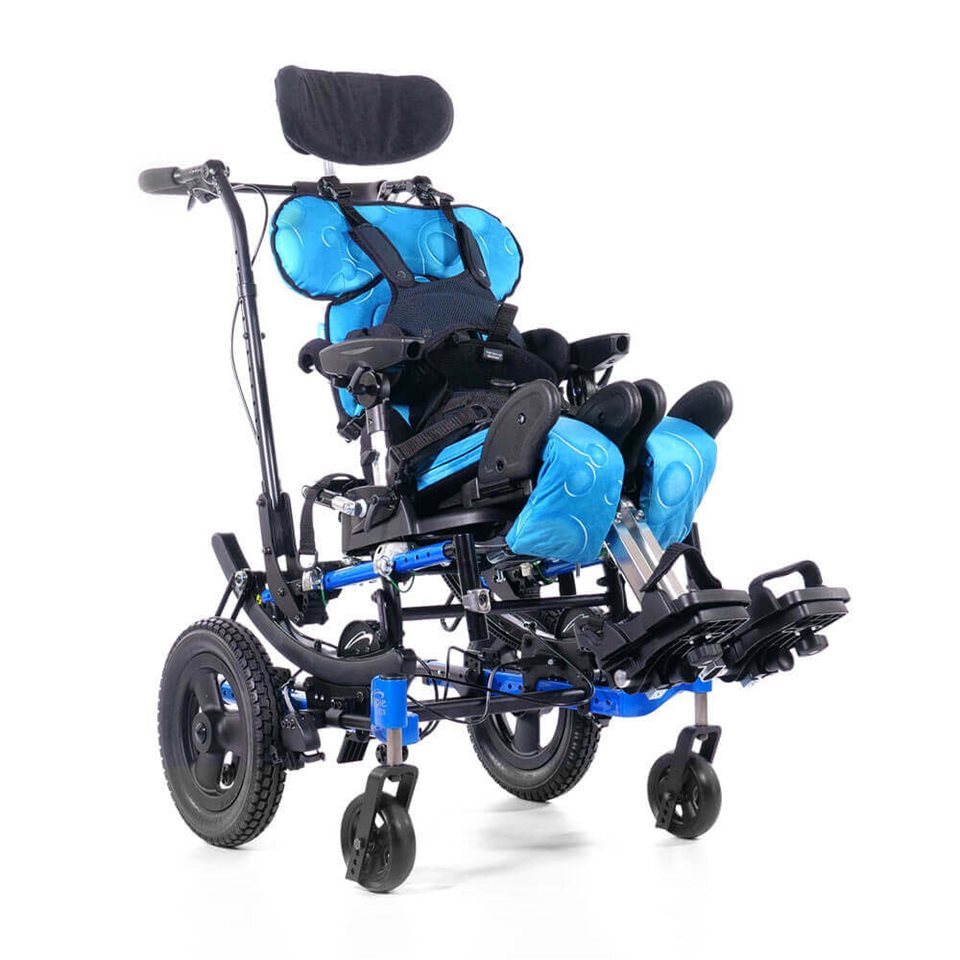
ZIPPIE TS Tilt-in-Space Wheelchair

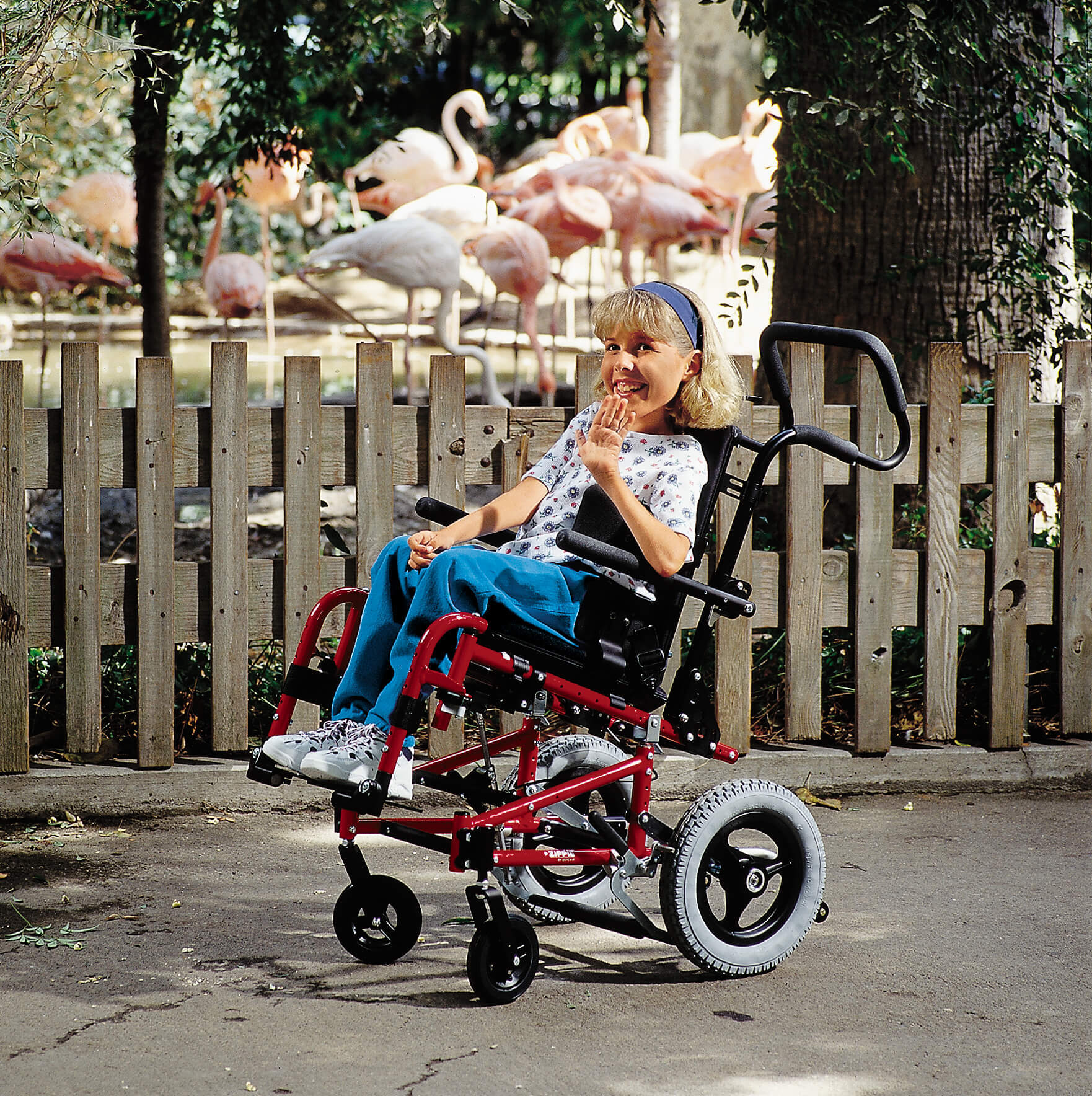
Zippie's original pediatric tilt-in-space wheelchair
The Zippie® TS is the original, premier pediatric tilt-in-space wheelchair. Available with either a folding or rigid frame, built-in growth, and compatible with many seating and positioning solutions, the TS has the widest variety of options in the tilt-in-space market.

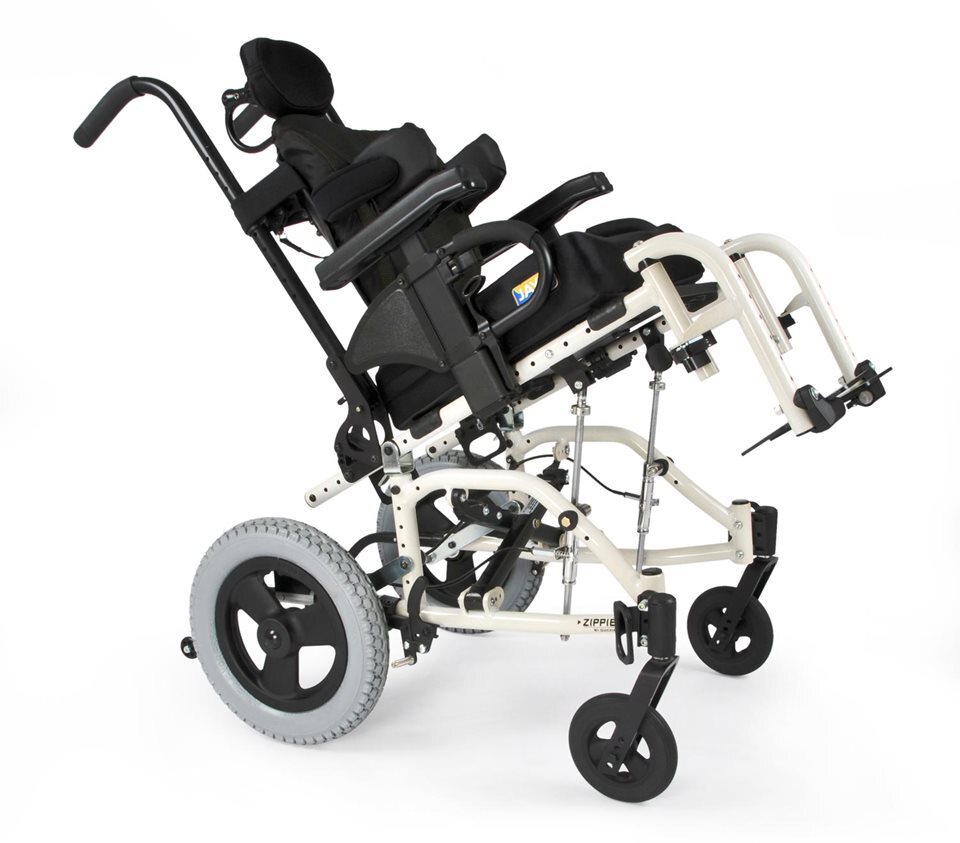
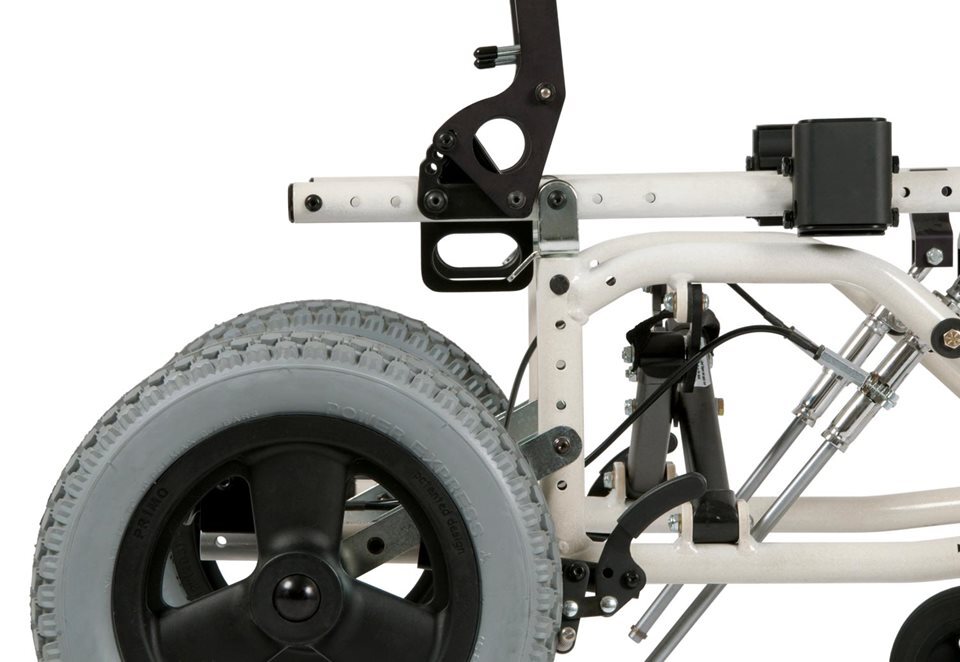
45° Traditional Tilt Technology The original, premier pediatric tilt-in-space wheelchair, the TS features 45° of traditional tilt technology, meaning the tilt action occurs at a fixed pivot point. The Foot Release Tilt Actuator is easy to operate and eliminates tangles caused by exposed cables.

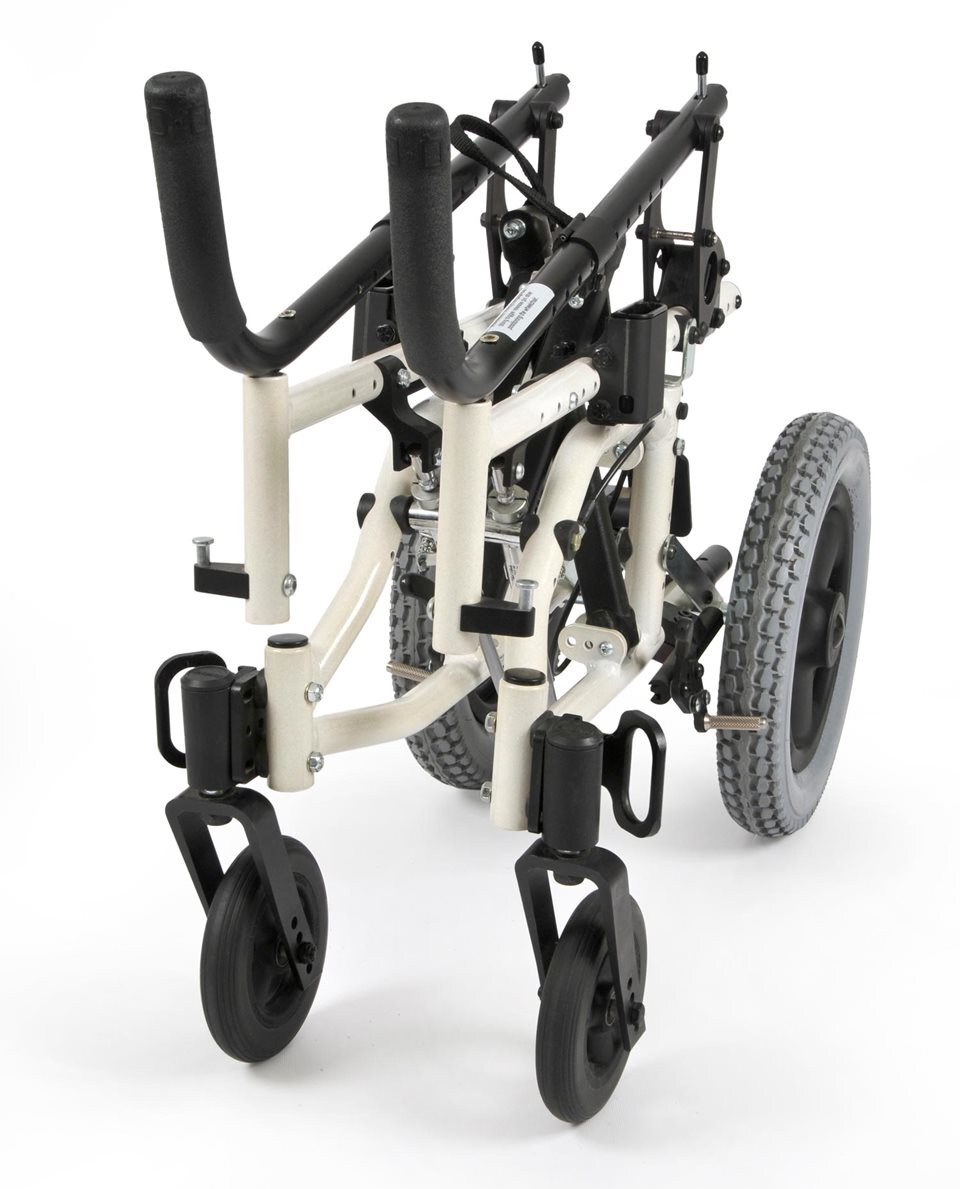
Folding and Rigid Frame Options Because no two families are alike, the TS kids wheelchair offers both folding and rigid frame options to accommodate a span of lifestyles and priorities. For families needing to store the wheelchair in a vehicle or in tight spaces at home, the Folding TS compresses into a small package. The rigid frame involves fewer moving parts and offers a lower overall weight.

Growth Capabilities The TS was designed to accommodate the changes your child may experience throughout the life of the wheelchair. Up to 2" of seat width and up to 5" of seat depth adjustments allow the TS to grow, while adjustable components keep your child comfortable and properly positioned during development.

ZIPPIE TS with Leckey Seating Sunrise Medical's Leckey product offering has something for everyone when it comes to your pediatric equipment needs. For us, "supporting children" means working together with our family of experts, designers, therapists, parents, and the broader clinical community to let children reach their goals. Our approach is simple: lead through innovation and clinical focus. Combined with the already extensive ZIPPIE mobility solutions, Sunrise Medical provides a truly complete pediatric offering with this new innovative Leckey interface.
*Leckey seating system pictured on a ZIPPIE IRIS base.

Specifications
DimensionsProduct Width:18.25" to 24.25"Seat Width:10" to 18"Seat Depth:13" to 20"Front Seat-to-Floor Height:15.5" to 20"Rear Seat-to-Floor Height:14" to 19"Tilt Range:45°Back Height:Fixed- 19"
- 22"
- 25"
- 16" to 22"
- 19" to 25"
Back Angle Adjustment:-30° to 5°Center of Gravity (COG) Adjustment:0"Shipping Dimensions:- Rigid: 31" L x 24" H x 24" W
- Folding: 33" L x 38" H x 13" W
Product InformationModel Number:EIZ1AHCPCS Code:- Rigid: E1233
- Folding: E1234
Performance/WeightsFrame Type:TiltFrame Material:AluminumTransit:YesUser Weight Capacity:165 lbs.Product Weight:29 lbs.Average Shipping Weight:50 lbs.Colors

-
Size Chart / measuring guide
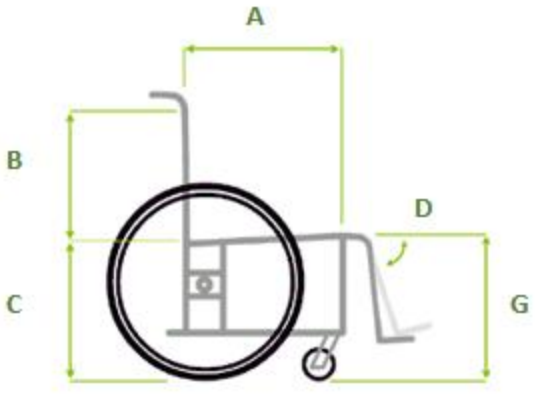
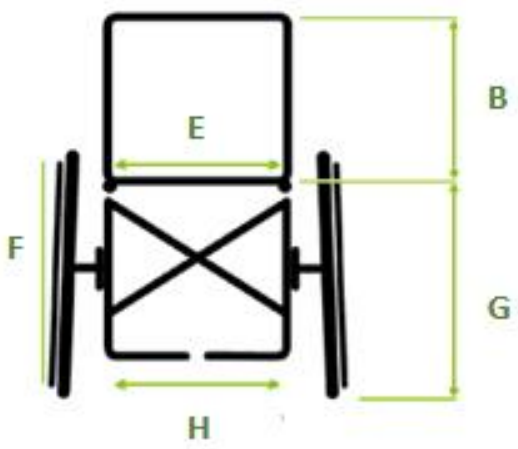
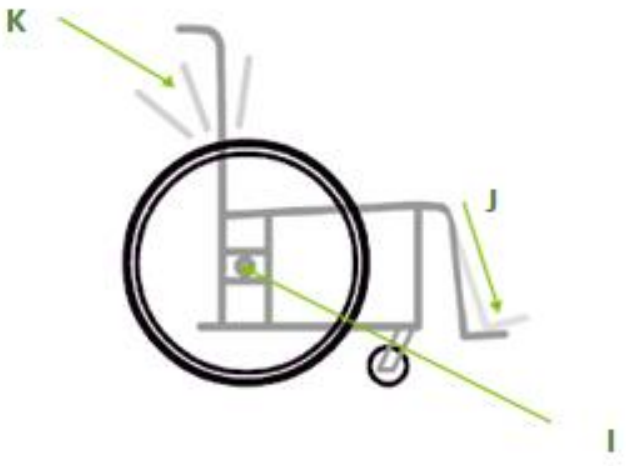
A-Seat DepthMeasure from the most posterior point of the body to the inside of the knee, minus at least two inches. Some prefer more leg overhang to make room for their hand when lifting their leg.B-Back HeightMeasured from the seat base to the top of the wheelchair back. Depends on how much upper back support is needed, and also affects freedom for the upper body to rotate.c-Rear Seat to FloorMeasurement from the ground to the rear seat edge. Relative to the front seat-to-floor dimension, this determines the rearward slope ("dump" or "squeeze") of the wheelchair seat.D-Hanger AngleDetermines how far the toes extend away from the body, measured from the horizontal. A tighter angle allows the wheelchair to turn around in less space. Depends in part on ability of the knee to bend towards the perpendicularE-Seat WidthDetermined by the widest point of the body from knee to hip, plus an inch to ensure room to move. Consider bulk of clothing, particularly a heavy winter coat, if relevant.F-Wheel CamberAngle of the wheel relative to the vertical. More camber improves stability and agility, but also limits ability to pass through narrow spaces. A typical daily wheelchair uses three degrees of camber.G-Front Seat to FloorMeasure the leg from the back of the knee to the sole of the foot. Then subtract the thickness of the cushion when it is compressed. Next, add a minimum of two inches for footrest clearance. Do not add the footrest clearance if the wheelchair will be foot-propelled.H-Footrest WidthMeasure from the inside of each leg rest tubing the distance or desired distance between leg rests.H-Footrest WidthMeasure from the inside of each leg rest tubing the distance or desired distance between leg rests.I-Center of GravityMeasure from the front of the seat back post to the center of the rear axle.J-Seat to Footrest LengthMeasure from the edge of the seat upholstery to the top rear of the footrest.K-Backrest AngleMeasure the angle of the back post to the floor. Ninety degrees will be perpendicular to the floor, to approximate the angle from the back post to the seat, subtract two degrees from measurement for every .5" of dump - Videos