

-
Description

ZIPPIE X'CAPE

Rigid kids wheelchair performance and folding wheelchair convenience
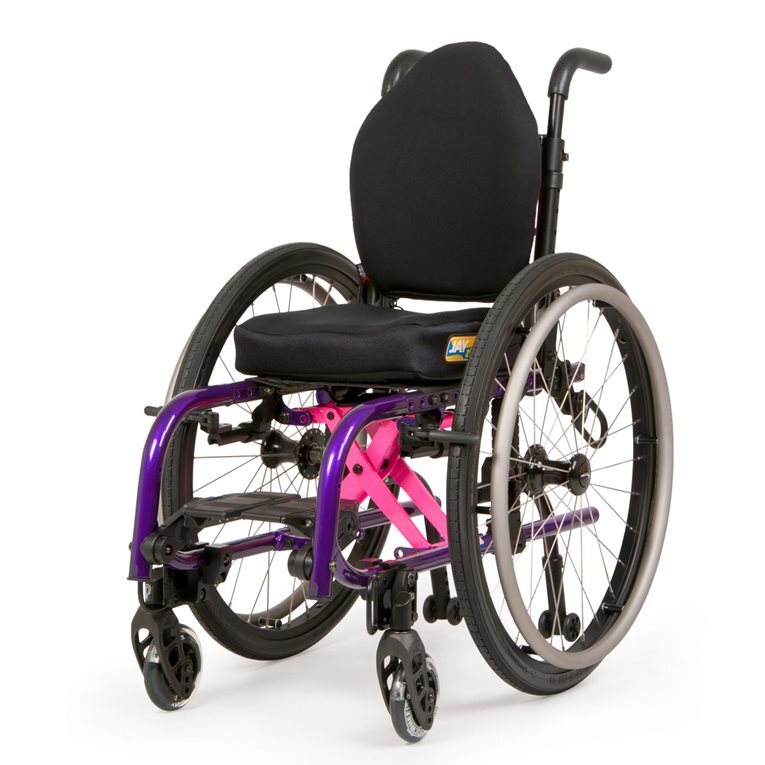
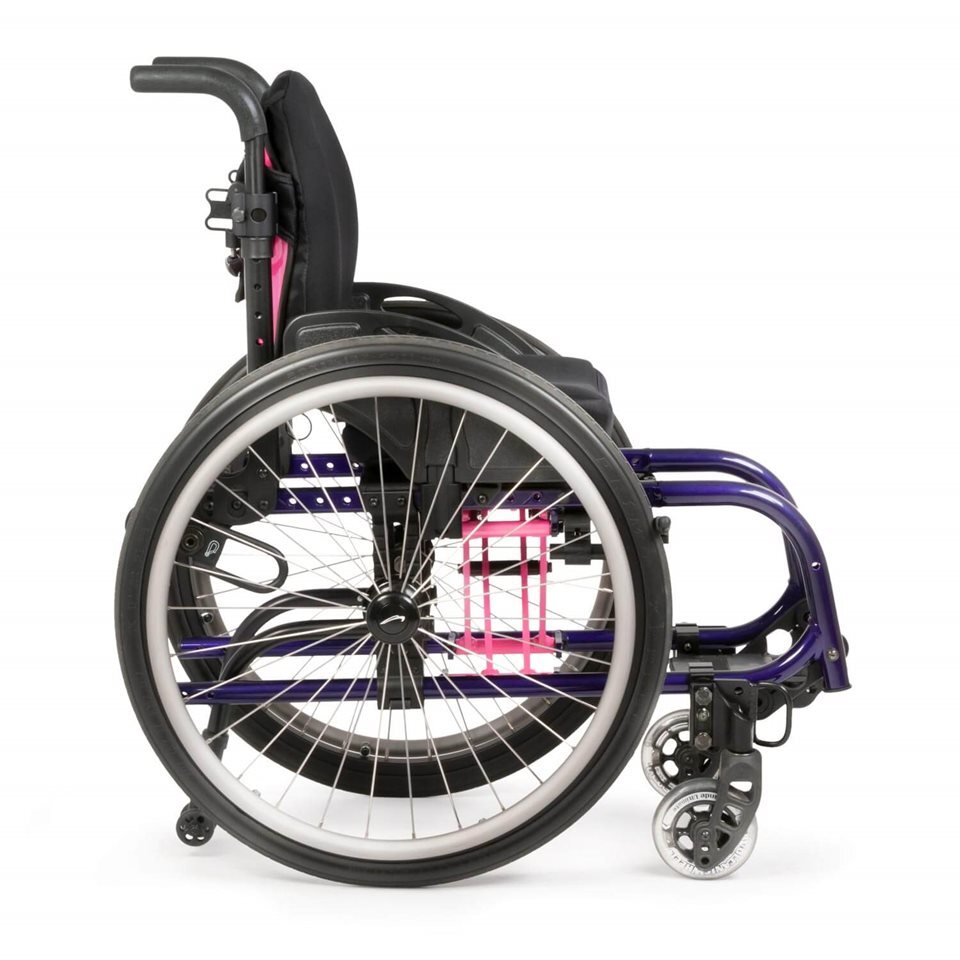
The ZIPPIE X’CAPE® pediatric folding wheelchair is the first ever wheelchair with XLOCK® technology for the performance of a rigid frame and the convenience of a folding frame. Designed for active and growing kids, the ZIPPIE X'CAPE weighs as little as 19 pounds and features a versatile frame available in 9,600 color combinations with a painted back shell.
Meet Lily
Pediatric-Specific Design
The Zippie X’CAPE was designed with the goal of helping children with varying mobility needs transition to their next level of independence. One of the lightest pediatric folding wheelchairs at as little as 19 lbs, the X'CAPE allows your child to spend less energy on propulsion and more on playing, exploring, and being a kid!
The X'CAPE's setup can be fine-tuned to provide the best possible access to the wheels for each child. As they grow, 2" of growth in the crossbrace and 3" in the seat rail keep your child positioned properly for maximum independence.

XLOCK® Crossbrace for Performance and Convenience
The Zippie X'CAPE's patented XLOCK® folding crossbrace fully locks when unfolded, creating a level of performance, efficiency, and durability comparable to a rigid frame wheelchair. And it couldn't be easier to transport. One-step push-to-lock and pull-to-fold functions are easy to operate with just one hand.
The X'CAPE's 24 frame colors and 20 crossbrace & back shell colors can be chosen separately to create 9,600 color combinations, so your child can sport their team colors, school colors, or personal favorites!
Z-finity® System for Lower Extremity Positioning
The Z-finity® System's footplate can be adjusted between .5" above the seat pan to 21" below the seat pan to provide proper support as your child grows. Its pivot arm allows for infinite adjustment of the footrest angle and placement to achieve optimal positioning of the feet, ankles, and knees.
Z-finity is available with both of the X'CAPE's front frame options - Swing-in/Swing-out and Fixed. Choose Swing-in/Swing-out hangers for aid in transfers and pulling up close to cabinets and counters. Choose Fixed hangers for the lightest weight configuration and an active style.
VersaRail™ for Limitless Seating and Accessory Options
Pediatric wheelchairs often don't provide enough space to mount multiple components and accessories - made-to-order seating, armrests, wheel locks, and side guards - leaving you in the tough spot of choosing what is most important. VersaRail's unique design accepts both bolt-on mounts and mounting clamps, and allows for shared placement of these components. so your child has access to all the options they need - no compromises.
The VersaRail also makes ordering simple by offering one seat rail system that is compatible with both sling upholstery and made-to-order seating options.
-
Size Chart / measuring guide
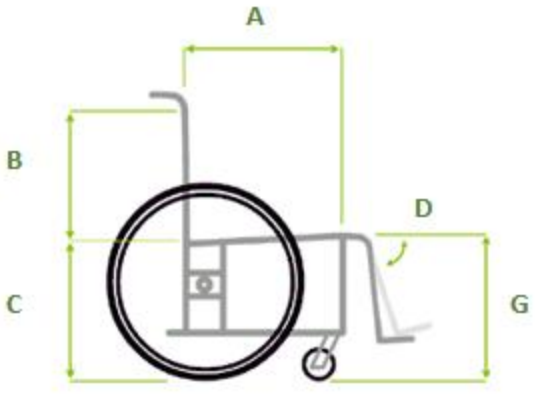
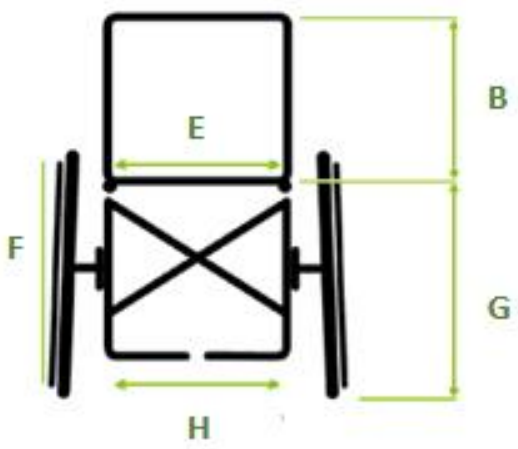
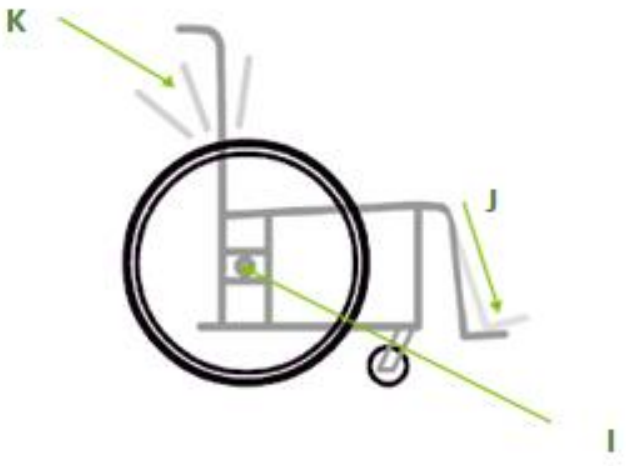
A-Seat DepthMeasure from the most posterior point of the body to the inside of the knee, minus at least two inches. Some prefer more leg overhang to make room for their hand when lifting their leg.B-Back HeightMeasured from the seat base to the top of the wheelchair back. Depends on how much upper back support is needed, and also affects freedom for the upper body to rotate.c-Rear Seat to FloorMeasurement from the ground to the rear seat edge. Relative to the front seat-to-floor dimension, this determines the rearward slope ("dump" or "squeeze") of the wheelchair seat.D-Hanger AngleDetermines how far the toes extend away from the body, measured from the horizontal. A tighter angle allows the wheelchair to turn around in less space. Depends in part on ability of the knee to bend towards the perpendicularE-Seat WidthDetermined by the widest point of the body from knee to hip, plus an inch to ensure room to move. Consider bulk of clothing, particularly a heavy winter coat, if relevant.F-Wheel CamberAngle of the wheel relative to the vertical. More camber improves stability and agility, but also limits ability to pass through narrow spaces. A typical daily wheelchair uses three degrees of camber.G-Front Seat to FloorMeasure the leg from the back of the knee to the sole of the foot. Then subtract the thickness of the cushion when it is compressed. Next, add a minimum of two inches for footrest clearance. Do not add the footrest clearance if the wheelchair will be foot-propelled.H-Footrest WidthMeasure from the inside of each leg rest tubing the distance or desired distance between leg rests.H-Footrest WidthMeasure from the inside of each leg rest tubing the distance or desired distance between leg rests.I-Center of GravityMeasure from the front of the seat back post to the center of the rear axle.J-Seat to Footrest LengthMeasure from the edge of the seat upholstery to the top rear of the footrest.K-Backrest AngleMeasure the angle of the back post to the floor. Ninety degrees will be perpendicular to the floor, to approximate the angle from the back post to the seat, subtract two degrees from measurement for every .5" of dump