



-
Description

ZIPPIE ZONE Rigid Wheelchair

Get in the Zone with a lightweight wheelchair designed for active kids
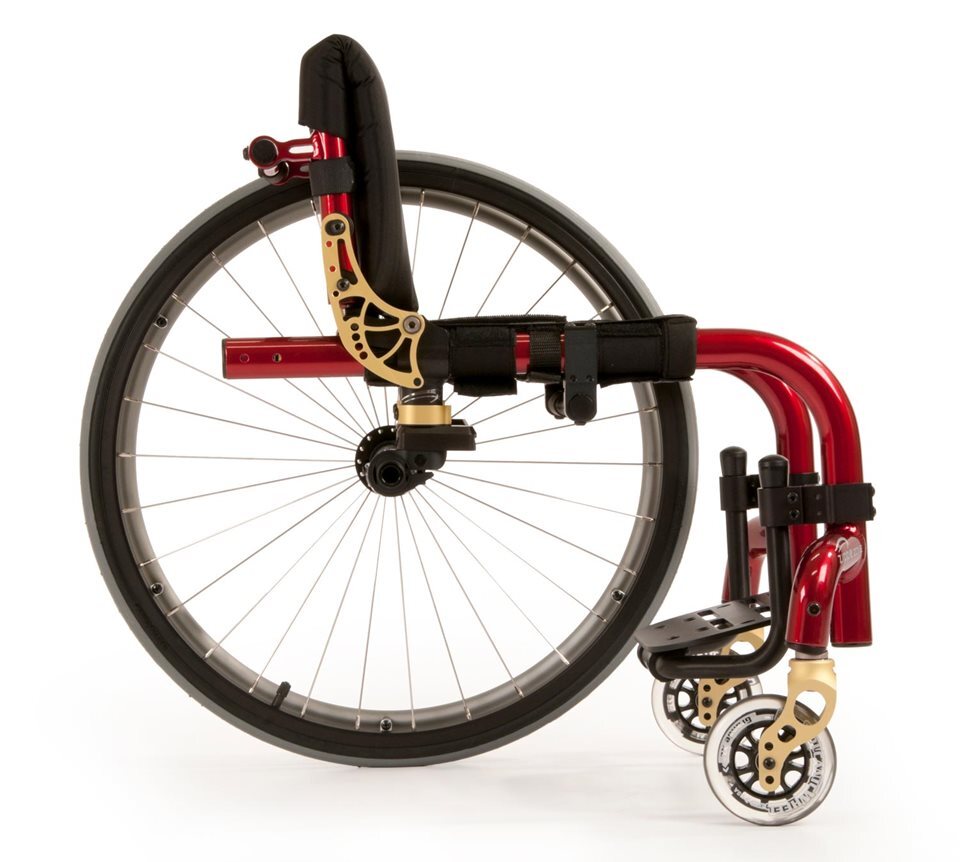
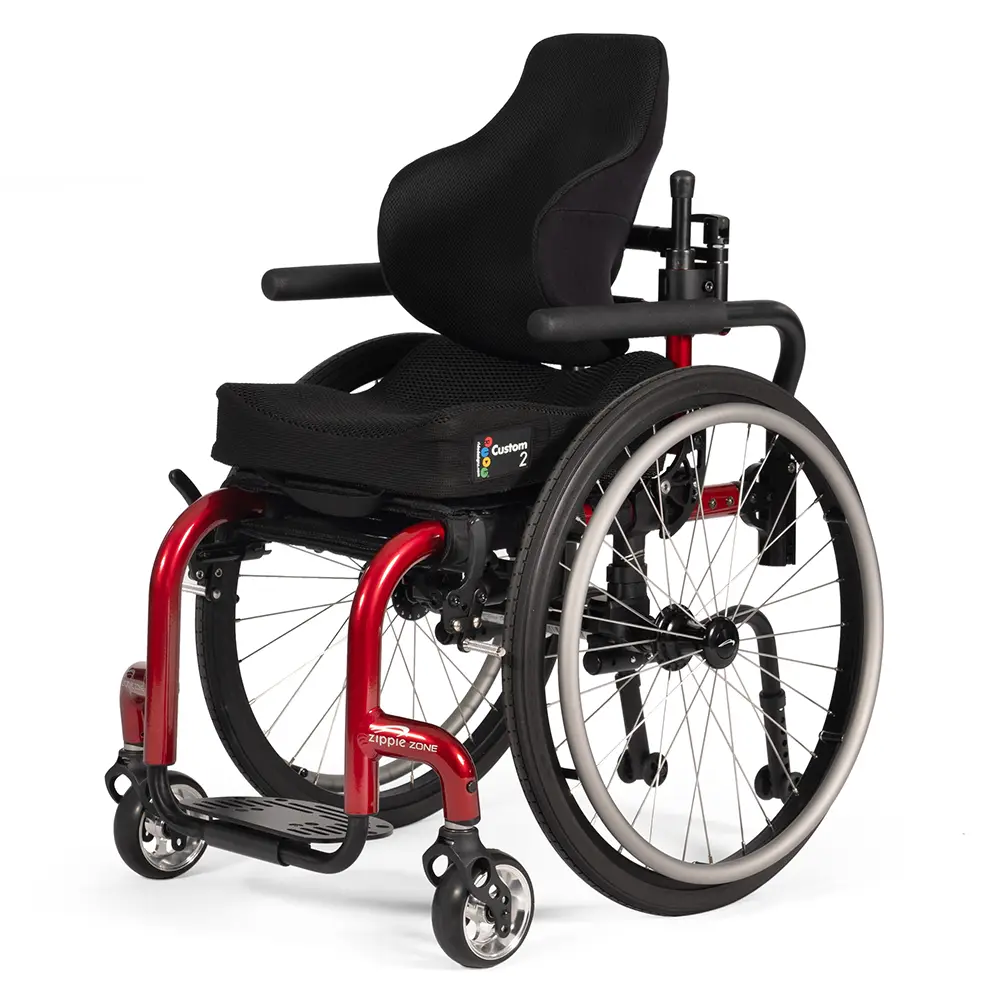
The Zippie® Zone® is an innovative, ultra lightweight, and option-rich pediatric rigid frame wheelchair that is perfect for active kids and teens. Designed for the unique needs of kids, the Zone offers numerous growth options and provides the greatest wheel access for independent mobility.

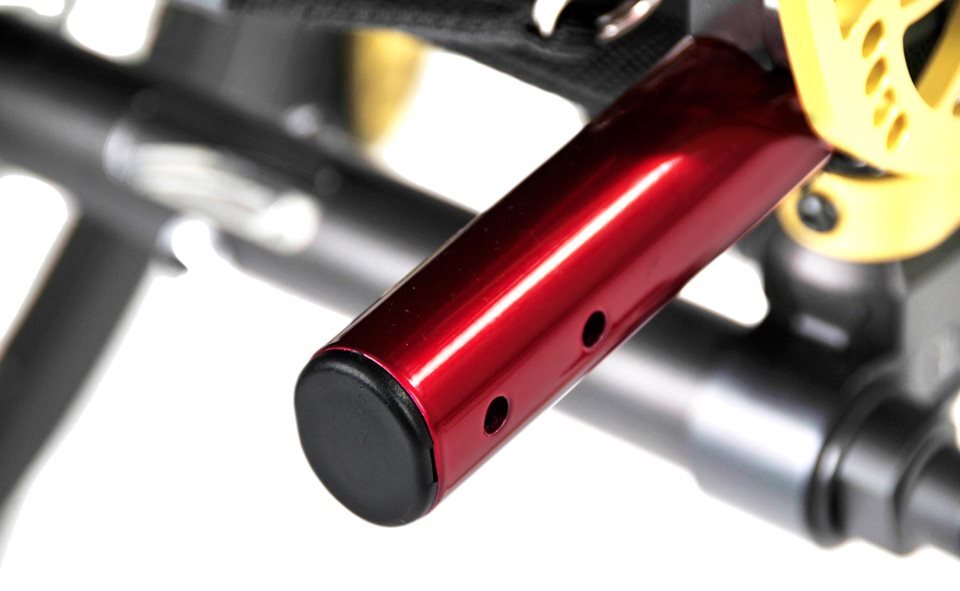
Growth Capabilities One thing we're certain of is that kids will grow! That's why the Zone kids wheelchair features 3" of depth growth built right into the frame. An extra 2" of depth growth is built into the sling upholstery. To expand frame width, simply replace a few parts, instead of the whole wheelchair frame.

Design Fit for Kids With independence comes confidence. Every inch of the Zone was designed to give kids the best possible wheel access for efficient propulsion. With features such as the inset backrest, flip-up, angle adjustable footrest, and hub lock located on the seat rail, kids are able to independently access the wheels, transfer in and out of the wheelchair, and access the wheel locks without interference during propulsion.

Ultra Lightweight Aerospace Aluminum When it comes to pediatric mobility, every pound holds more weight. That's why we used 7000 series aerospace aluminum to make the Zone's feather light frame. Combining this material, our ShapeLoc Technology heat-treating process, and ovalized tubing increases strength, allows for thinner tube walls, and decreases overall weight to create a wheelchair that is lighter, just as strong, and more budget-friendly than titanium.

Colorful Options We want the Zone wheelchair to be an expression of your child's unique personality. Aside from its super stylish frame, the Zone also has bright options including Celestial Sapphire, Pink Power, and Zebra frame colors; colored caster forks and axle plates; Spinergy wheels; and colorful spoke guards.

Ride Designs A Ride Designs® custom seating system works well on a ZIPPIE Zone to provide intimate support where needed, matching a child's unique body curves. A Ride Custom Cushion paired with a Ride Custom Back also helps boost postural control and stabilize the pelvis and trunk, often resulting in increased performance and freedom of movement, while enhancing pressure distribution away from bony prominences. Ride Custom Cushions and the Ride Custom Back are made in virtually any size or shape and can be modified for linear growth and weight change at a fraction of the cost of new seating.
Colors

-
Size Chart / measuring guide
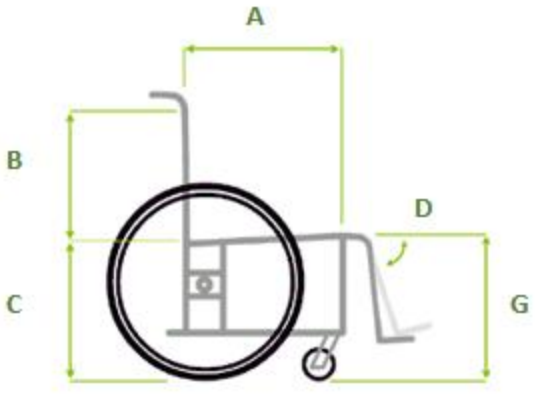
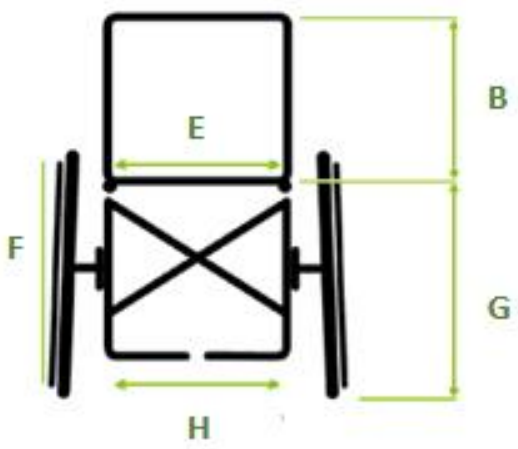
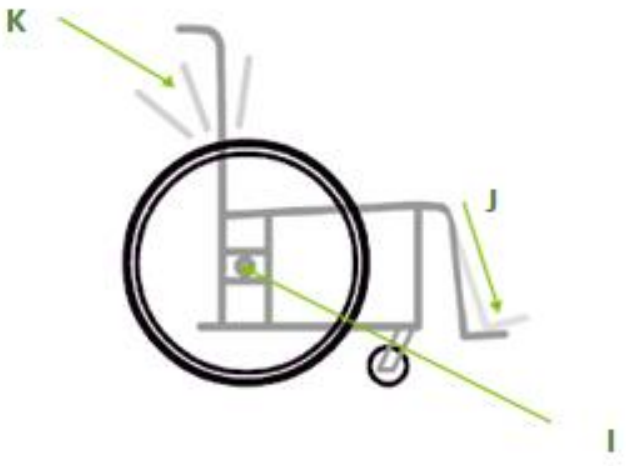
A-Seat DepthMeasure from the most posterior point of the body to the inside of the knee, minus at least two inches. Some prefer more leg overhang to make room for their hand when lifting their leg.B-Back HeightMeasured from the seat base to the top of the wheelchair back. Depends on how much upper back support is needed, and also affects freedom for the upper body to rotate.c-Rear Seat to FloorMeasurement from the ground to the rear seat edge. Relative to the front seat-to-floor dimension, this determines the rearward slope ("dump" or "squeeze") of the wheelchair seat.D-Hanger AngleDetermines how far the toes extend away from the body, measured from the horizontal. A tighter angle allows the wheelchair to turn around in less space. Depends in part on ability of the knee to bend towards the perpendicularE-Seat WidthDetermined by the widest point of the body from knee to hip, plus an inch to ensure room to move. Consider bulk of clothing, particularly a heavy winter coat, if relevant.F-Wheel CamberAngle of the wheel relative to the vertical. More camber improves stability and agility, but also limits ability to pass through narrow spaces. A typical daily wheelchair uses three degrees of camber.G-Front Seat to FloorMeasure the leg from the back of the knee to the sole of the foot. Then subtract the thickness of the cushion when it is compressed. Next, add a minimum of two inches for footrest clearance. Do not add the footrest clearance if the wheelchair will be foot-propelled.H-Footrest WidthMeasure from the inside of each leg rest tubing the distance or desired distance between leg rests.H-Footrest WidthMeasure from the inside of each leg rest tubing the distance or desired distance between leg rests.I-Center of GravityMeasure from the front of the seat back post to the center of the rear axle.J-Seat to Footrest LengthMeasure from the edge of the seat upholstery to the top rear of the footrest.K-Backrest AngleMeasure the angle of the back post to the floor. Ninety degrees will be perpendicular to the floor, to approximate the angle from the back post to the seat, subtract two degrees from measurement for every .5" of dump - Videos