

-
Description

Companion HD 3-Wheel

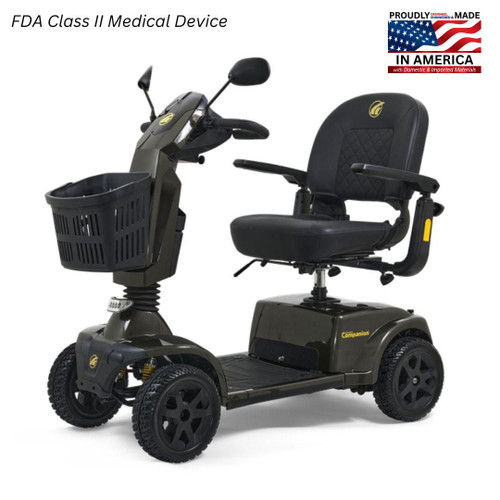
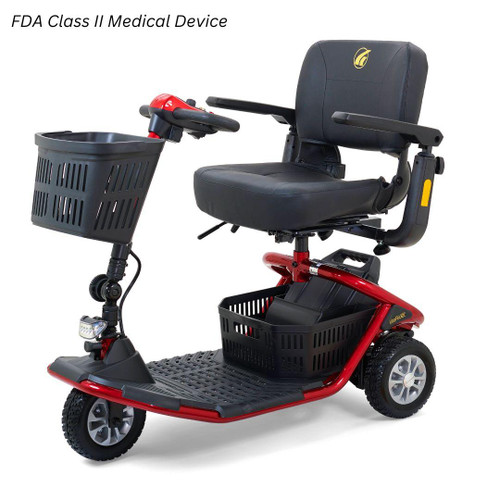
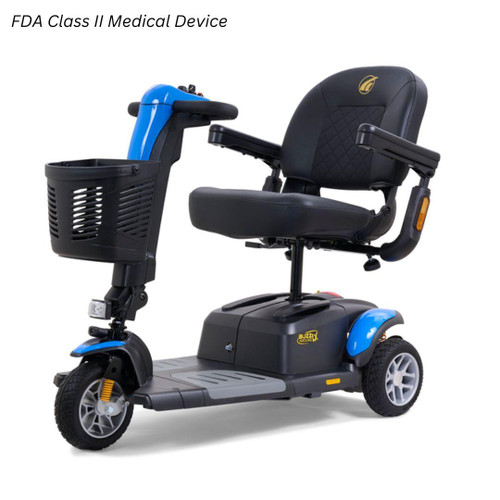
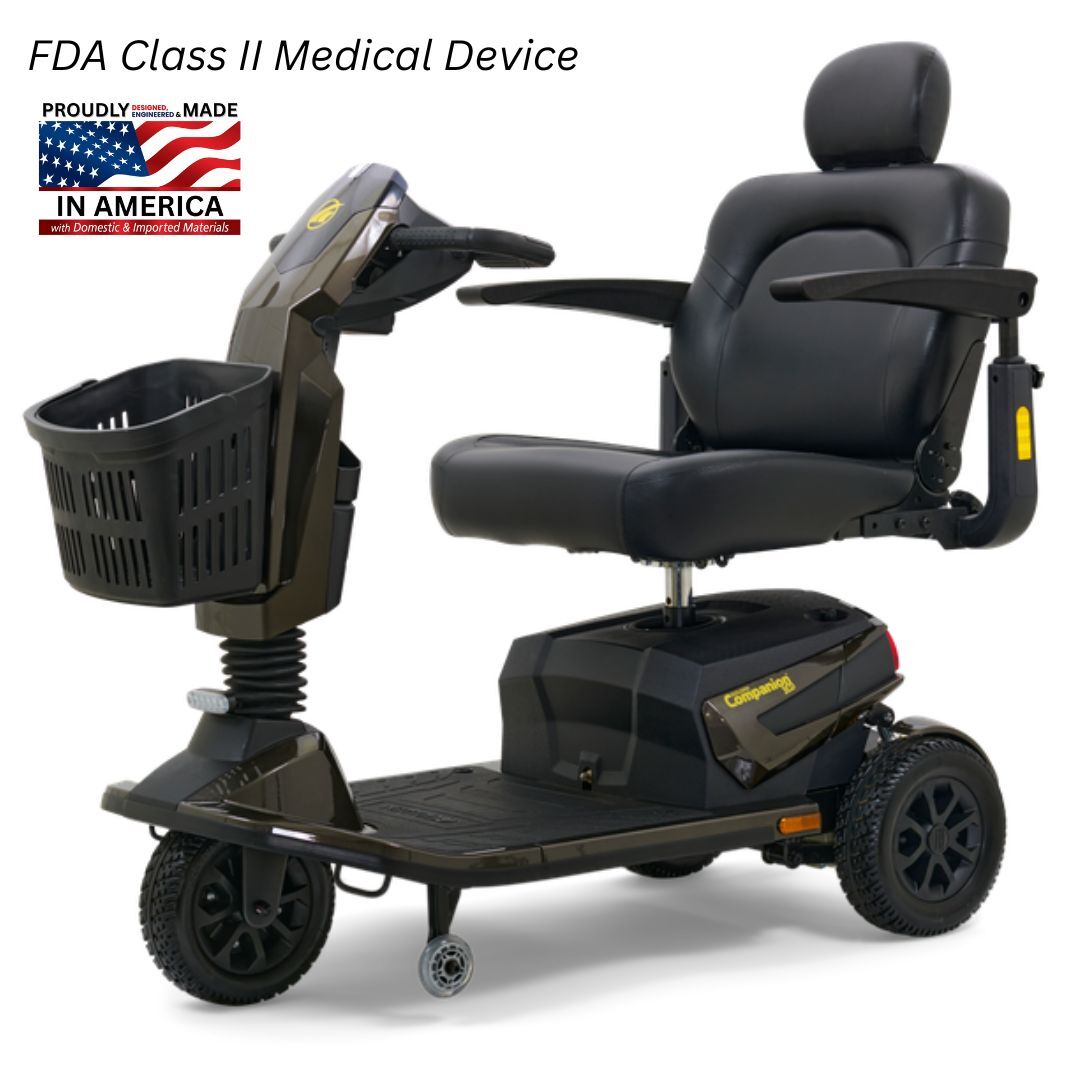
The new Golden Companion Heavy-Duty 3-wheel scooter combines a modern design with high performance features to offer the ultimate indoor or outdoor driving experience at a weight capacity of 500 lbs.
FDA Class II Medical Devices designed by Golden Technologies are intended to assist persons with physical disablements.

The Golden Companion Heavy-Duty 3-wheel scooter combines a modern design with high performance features to offer the ultimate indoor or outdoor driving experience at a weight capacity of 500 lbs.
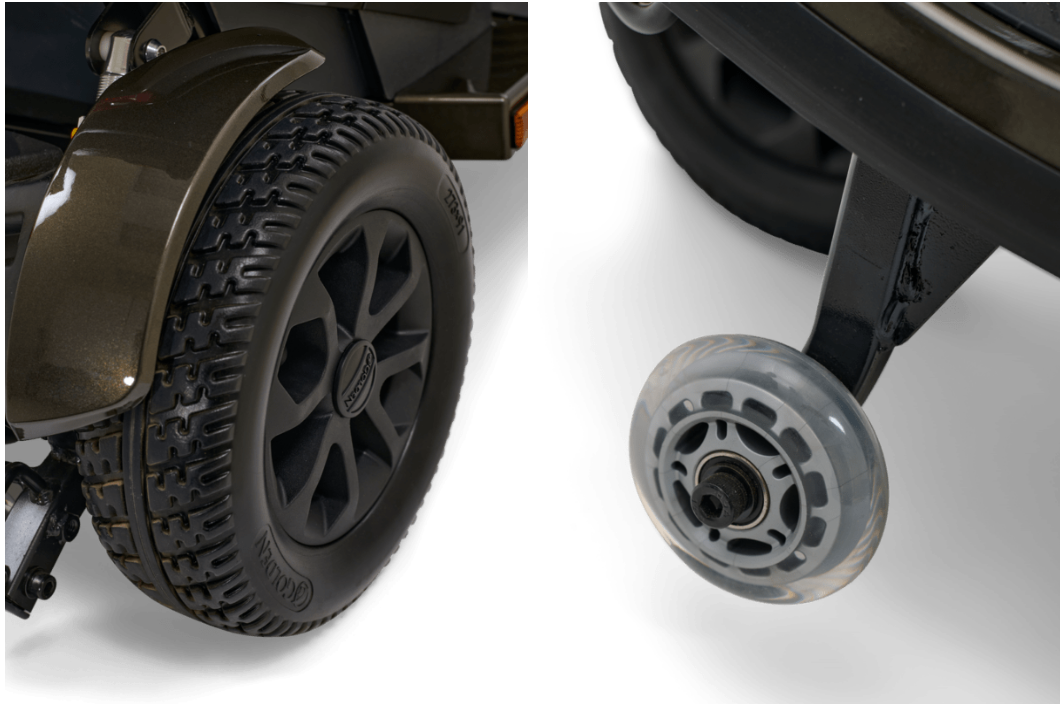
The Companion HD’s rugged construction is built for stability and maneuverability with front anti-tip wheels and a 51” turning radius. It features solid, non-marking tires, and has an operating range of 16 miles on 2-NF22 batteries with a maximum speed of 6 mph.

The Companion Features:
- 500 lb. Weight Capacity
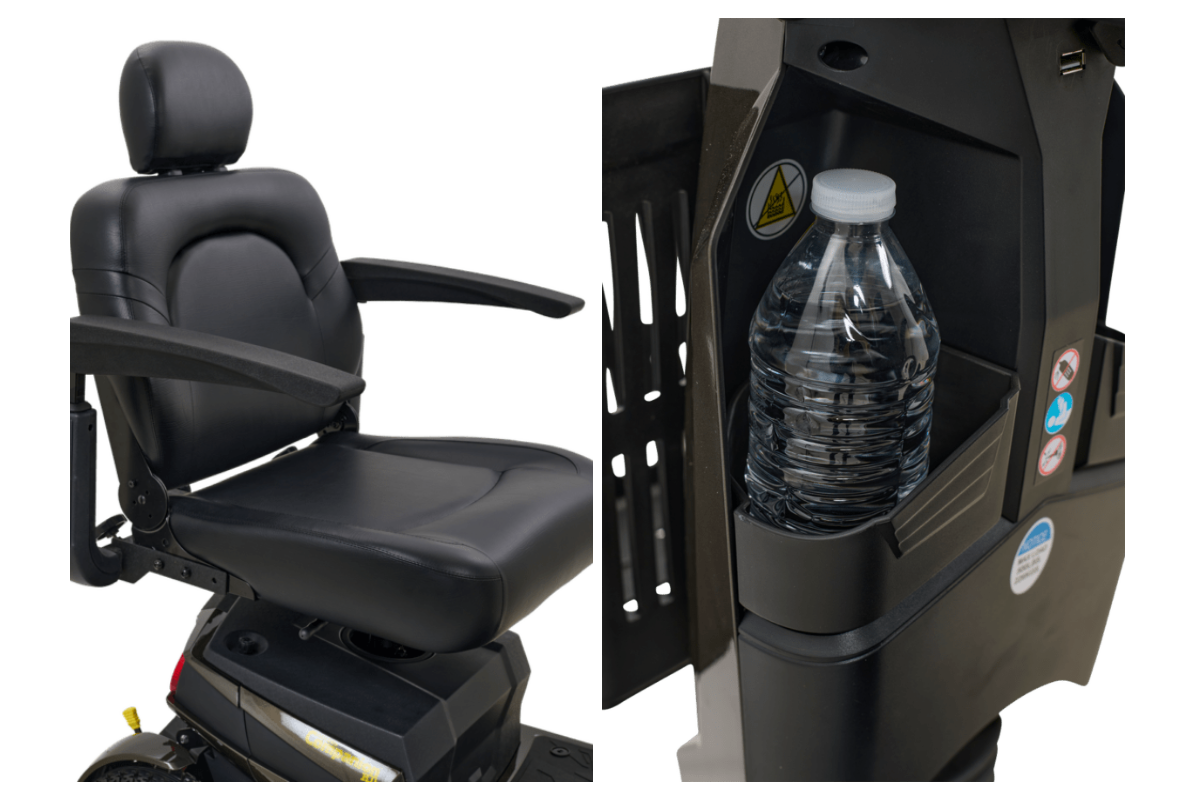
- Extra Wide High Back Seat
- Galactic Grey, Azure Blue & Crimson Red Color Shrouds
- Tiller Mounted USB Charging Port
- 8 Amp Super Charger for Maximum Battery Life
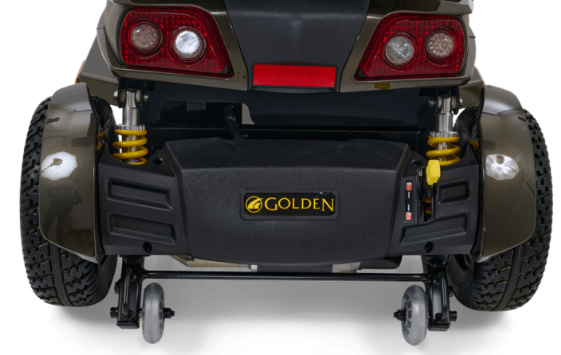
- Rear Suspension
- Powerful 120 Amp Controller
- Fully Integrated LCD Console Display that Monitors Fault Codes & Battery Energy Level
- LED Lighting Package with Front Headlights, Rear Taillights & Flashers
- Infinite Position Tiller
- Extra Wide High Back Seat that Swivels for Easy Access
- Large Front Basket
- 10.75” Solid Tires with Alloy Wheels
- 2-NF22 Batteries

The GC540 Companion offers rear suspension for a smooth ride, and a powerful 120 Amp controller for outstanding climbing ability.
Colors

Specifications
- Medicare Code - K0808
- User Weight Capacity - 500 lbs
- Drive Wheels - Rear
- Maximum Speed - 6 mph
- Ground Clearnace to Center Deck - 6.25″
- Ground Clearance to Transaxle/Motor - 3.75″
- Turning Radius - 51″
- Type Batteries - 2-NF22
- Optional Batteries - N/A
- Colors - Blue, Grey, Red
- Freewheel Mode - Yes
- Electronic Speed Control - Yes
- Electro-Mechanical Brakes - Yes
- Charger - Portable 8 Amp Off Board
- Controller - 120 Amp
- Length - 48″
- Width - 30.5″
- Height (ground to top of back of headrest) - N/A
- Ground to Top of Seat - 24.5” – 27.5”
- Ground to Top of Deck - 8”
- Deck to Top of Seat - 16.5” – 19.5”
- Number Seat Height Positions - 4
- Size of Increments - 1”
- Front Axle to Rear Axle - 36”
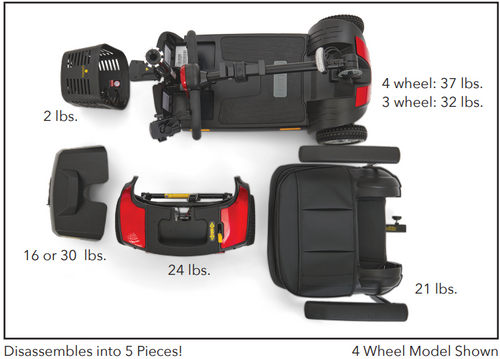
- Weight of Unit (assembled) - 225.5 lbs
- Tires (standard) - Flat Free / Non Marking Solid
- Front Tires - 10.75″
- Rear Tires - 10.75″
- Front & Rear Anti-Tippers - 3″
- Standard Seat - Extra Wide High Back
- Seat Back Height – no headrest - 18″
- Seat Width x Depth - 22” x 20”
- Seat Color - Black
- Seat Rotation - 90 Degree either direction 360 Degrees
- Optional Seat - Captain’s Chair
- Optional Seat Back Height – no headrest - 18″
- Optional Seat Width x Depth - 20” x 20”
- Optional Seat Color - Black
- Power Elevating Seat – 6” with Lockout - Yes
- Warranty on Frame - 5 Year
- Warranty Drive Train - 2 years
- Warranty Electronics - 2 years
- Warranty Batteries - 1 year
-
Size Chart / measuring guide
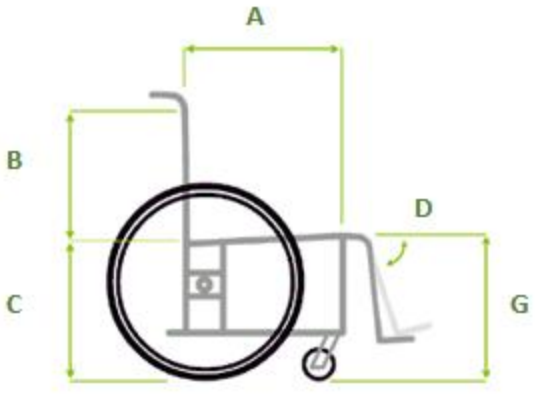
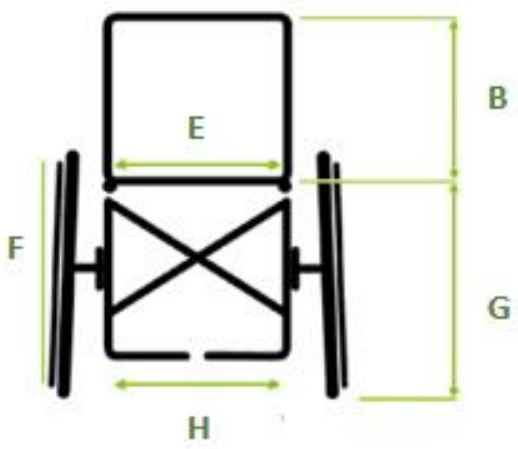
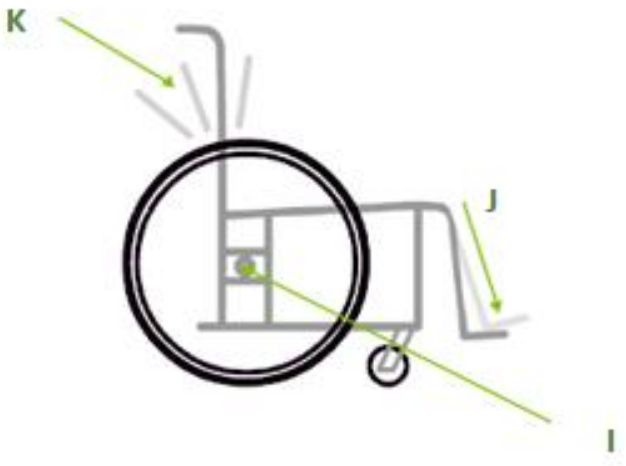
A-Seat DepthMeasure from the most posterior point of the body to the inside of the knee, minus at least two inches. Some prefer more leg overhang to make room for their hand when lifting their leg.B-Back HeightMeasured from the seat base to the top of the wheelchair back. Depends on how much upper back support is needed, and also affects freedom for the upper body to rotate.c-Rear Seat to FloorMeasurement from the ground to the rear seat edge. Relative to the front seat-to-floor dimension, this determines the rearward slope ("dump" or "squeeze") of the wheelchair seat.D-Hanger AngleDetermines how far the toes extend away from the body, measured from the horizontal. A tighter angle allows the wheelchair to turn around in less space. Depends in part on ability of the knee to bend towards the perpendicularE-Seat WidthDetermined by the widest point of the body from knee to hip, plus an inch to ensure room to move. Consider bulk of clothing, particularly a heavy winter coat, if relevant.F-Wheel CamberAngle of the wheel relative to the vertical. More camber improves stability and agility, but also limits ability to pass through narrow spaces. A typical daily wheelchair uses three degrees of camber.G-Front Seat to FloorMeasure the leg from the back of the knee to the sole of the foot. Then subtract the thickness of the cushion when it is compressed. Next, add a minimum of two inches for footrest clearance. Do not add the footrest clearance if the wheelchair will be foot-propelled.H-Footrest WidthMeasure from the inside of each leg rest tubing the distance or desired distance between leg rests.H-Footrest WidthMeasure from the inside of each leg rest tubing the distance or desired distance between leg rests.I-Center of GravityMeasure from the front of the seat back post to the center of the rear axle.J-Seat to Footrest LengthMeasure from the edge of the seat upholstery to the top rear of the footrest.K-Backrest AngleMeasure the angle of the back post to the floor. Ninety degrees will be perpendicular to the floor, to approximate the angle from the back post to the seat, subtract two degrees from measurement for every .5" of dump - Videos